Today was our final day in Jaipur and we went to see some
more of the sites.
Highlights included a mother trying to drop a brick on her
son’s foot, a Stepping Well, the Amber Palace, a palace in a lake, wild monkeys
and Dave becoming a power guru with karma.
We were trying to get to the Amber Palace which is Jaipur’s
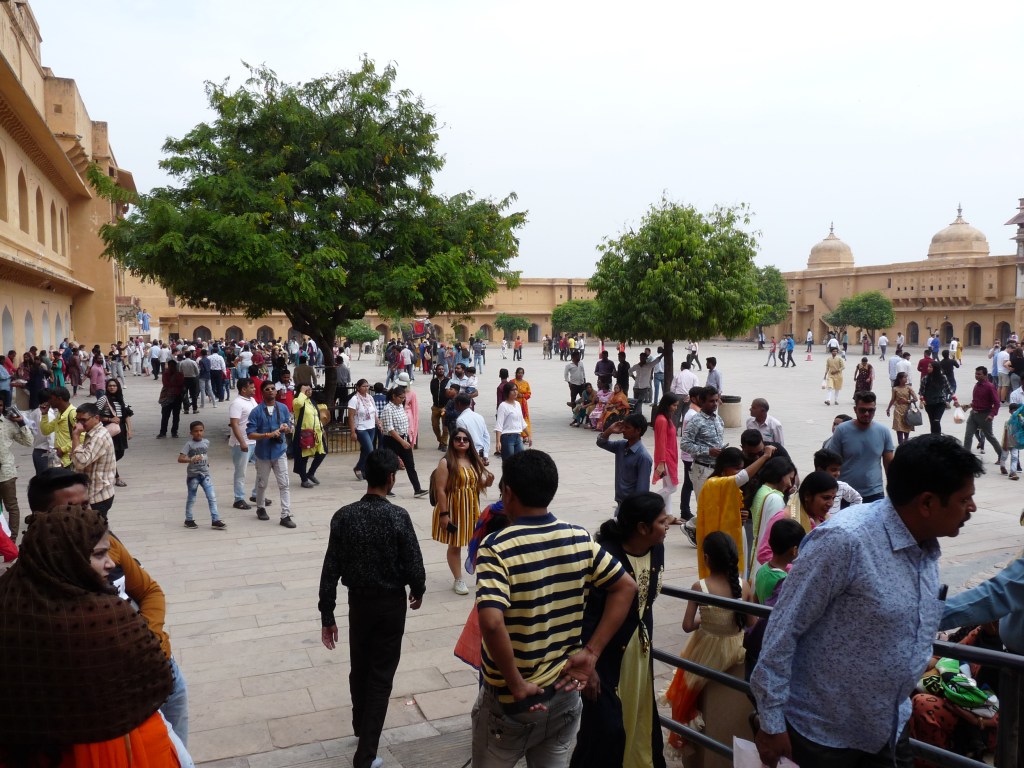
number one tourist attraction. Unfortunately so was everyone else. The palace is, inevitably, at the top of a
hill and there are only three ways in. You can walk, you can take an elephant
ride or you can drive up.
The elephant option looks good fun but animal rights groups
have criticised the use of elephants because carrying passengers can cause them
lasting injuries. Walking up ran the risk of causing lasting injuries to us so
we opted instead for driving up.
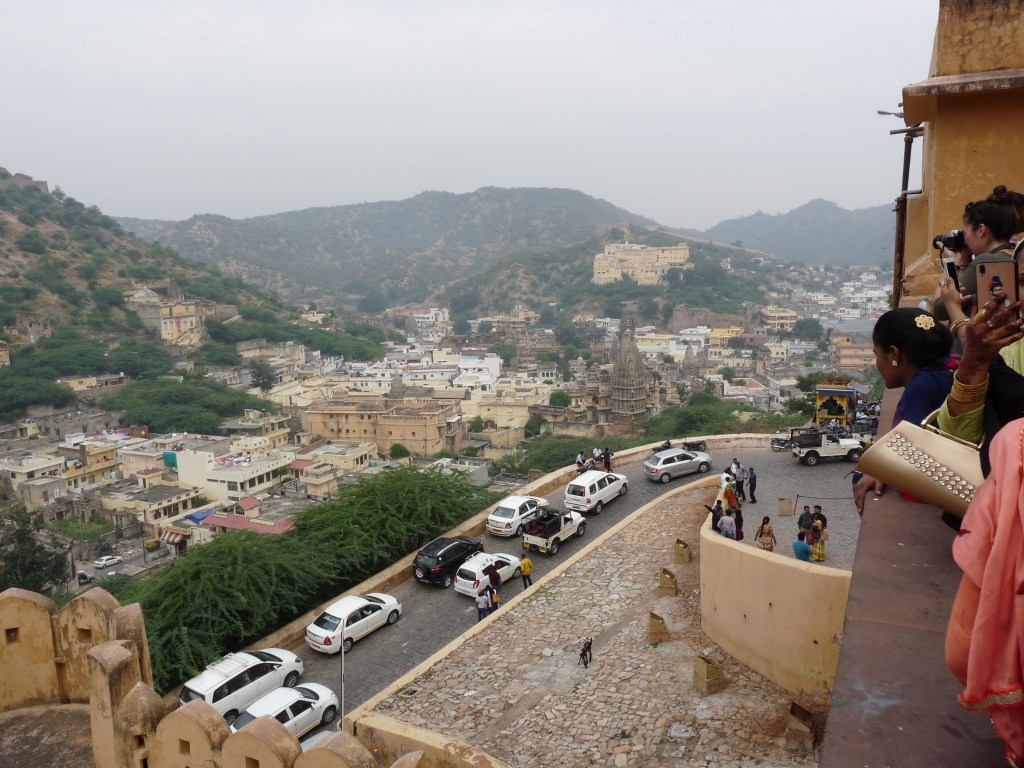
The road in is one way, narrow and bottlenecks at various
stages. We got stuck for half an hour or so but it proved very fortuitous as we
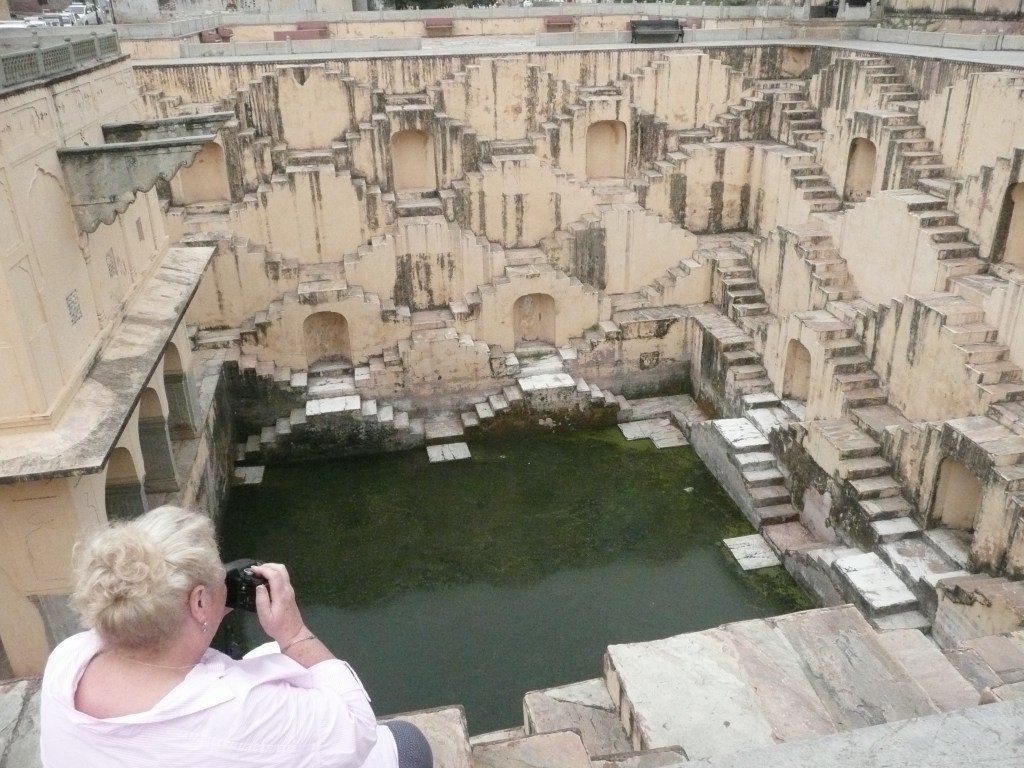
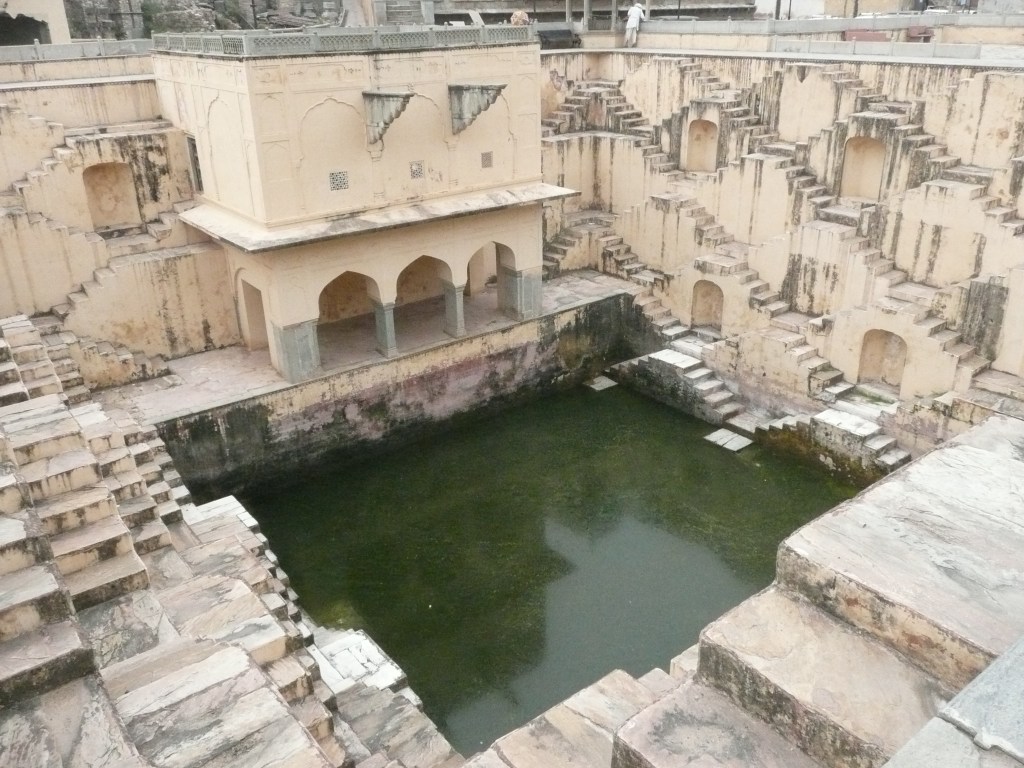
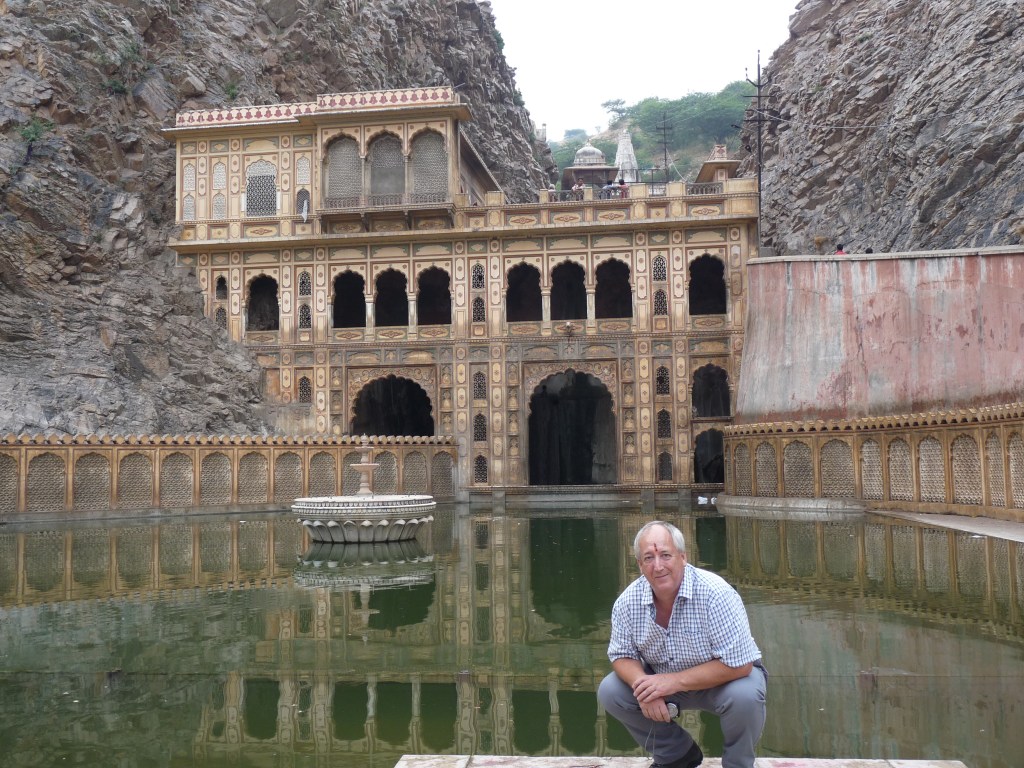
were right outside a Stepping Well. We’ve never seen one before and I was blown
away by the architecture which looks like something out of an Escher drawing. You
wouldn’t want to use the water now but people used to get all of their water
from here. And in times of attack, the local royalty used to hide their treasure
in the pool.
There’s always steps in India.
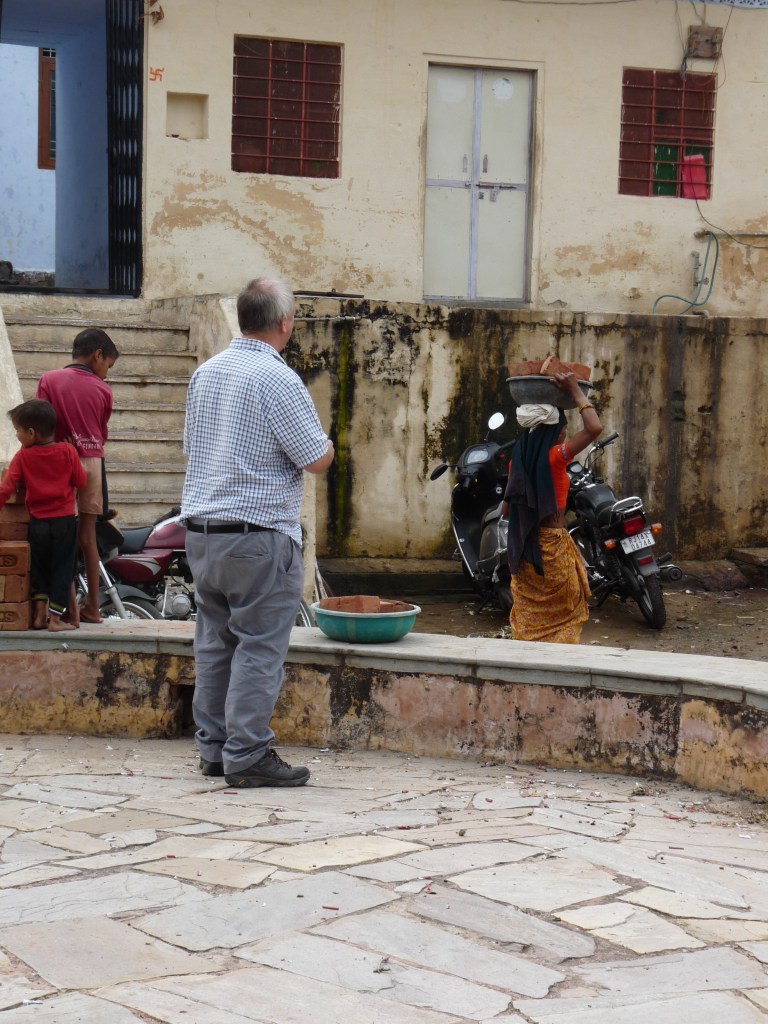
Opposite the well there was a temple which overlooked a few
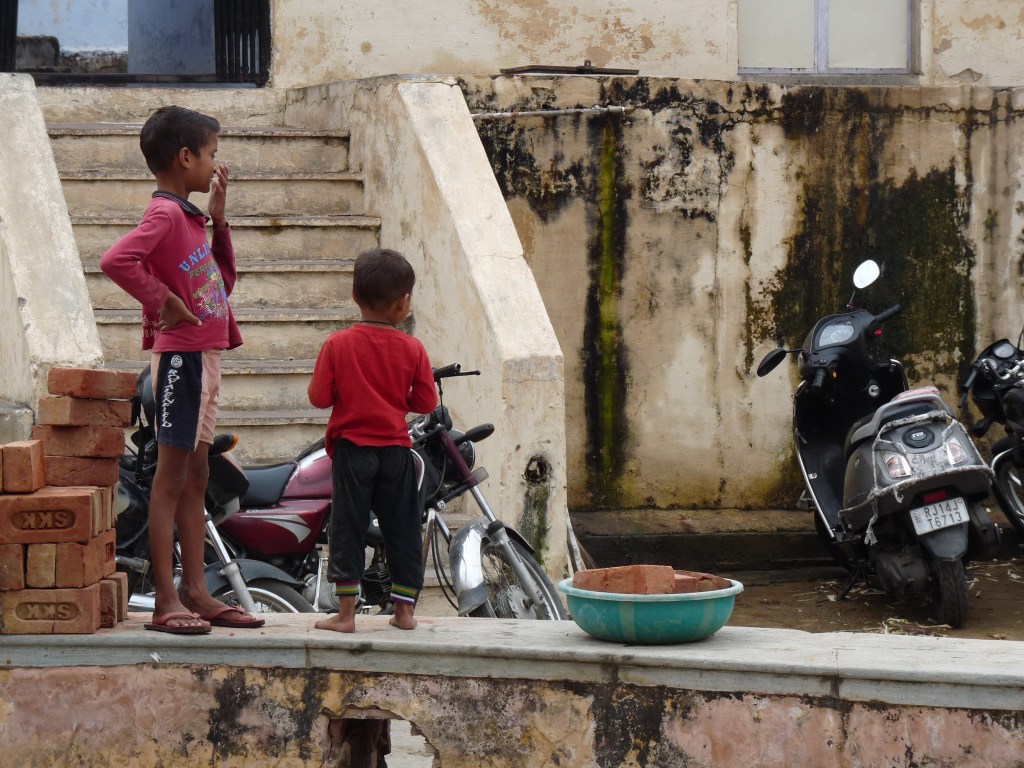
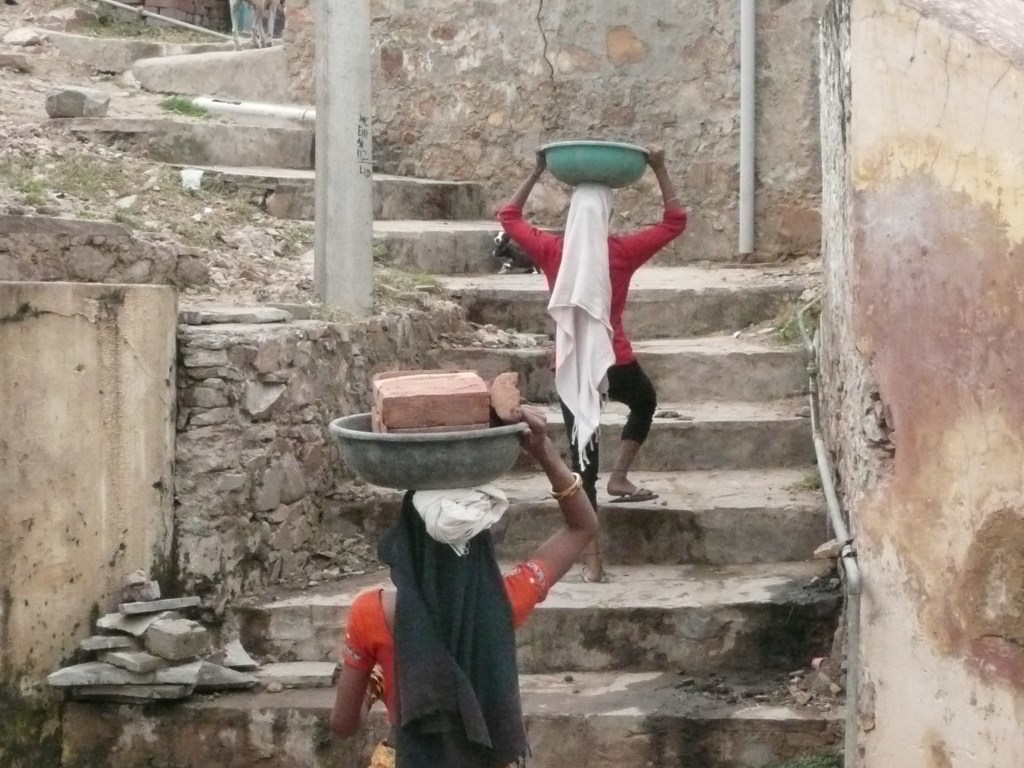
houses. The women do a lot of the hard work in India and I counted one of the
two women carrying nine bricks in a bowl on her head. It would have been ten
but one fell out as she was struggling to lift it up, just narrowly missing her
bare footed son who was trying to help.
Dave impressed by the strength of the women but less so by the brick that missed the boy’s foot by a couple of inches.
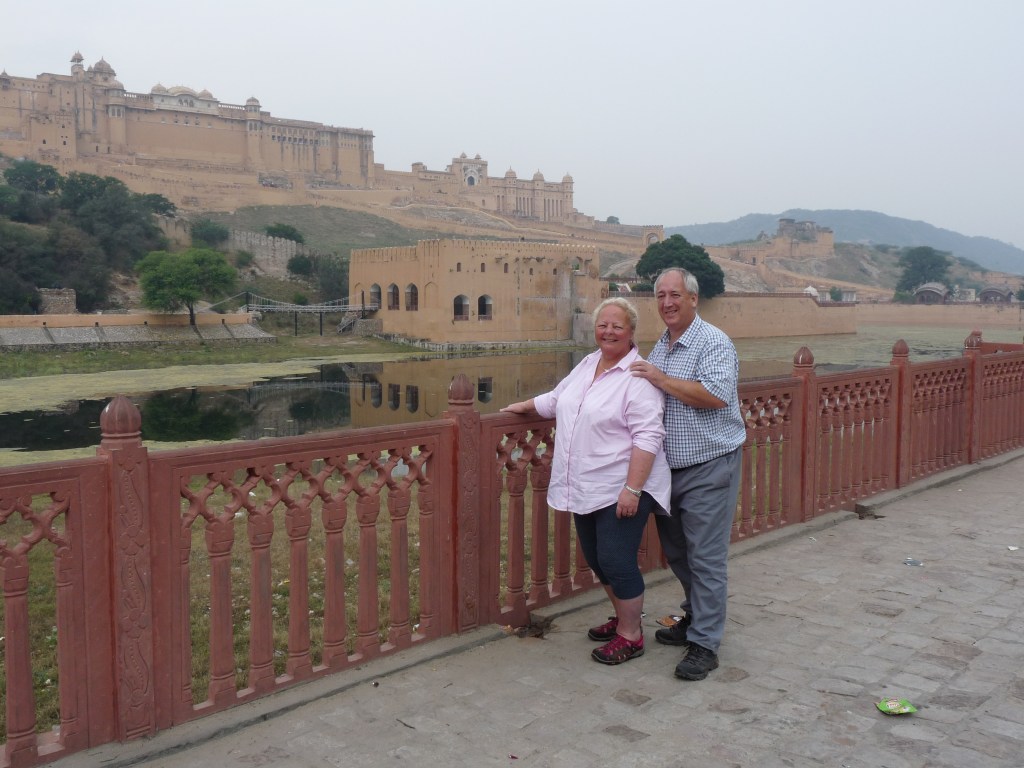
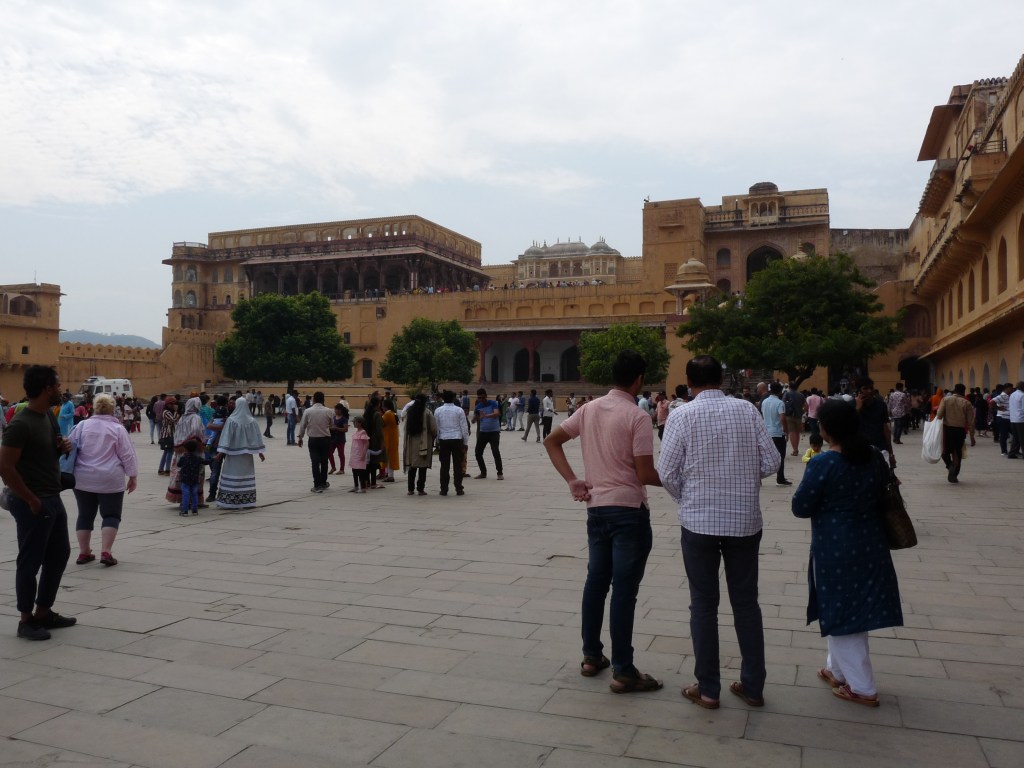
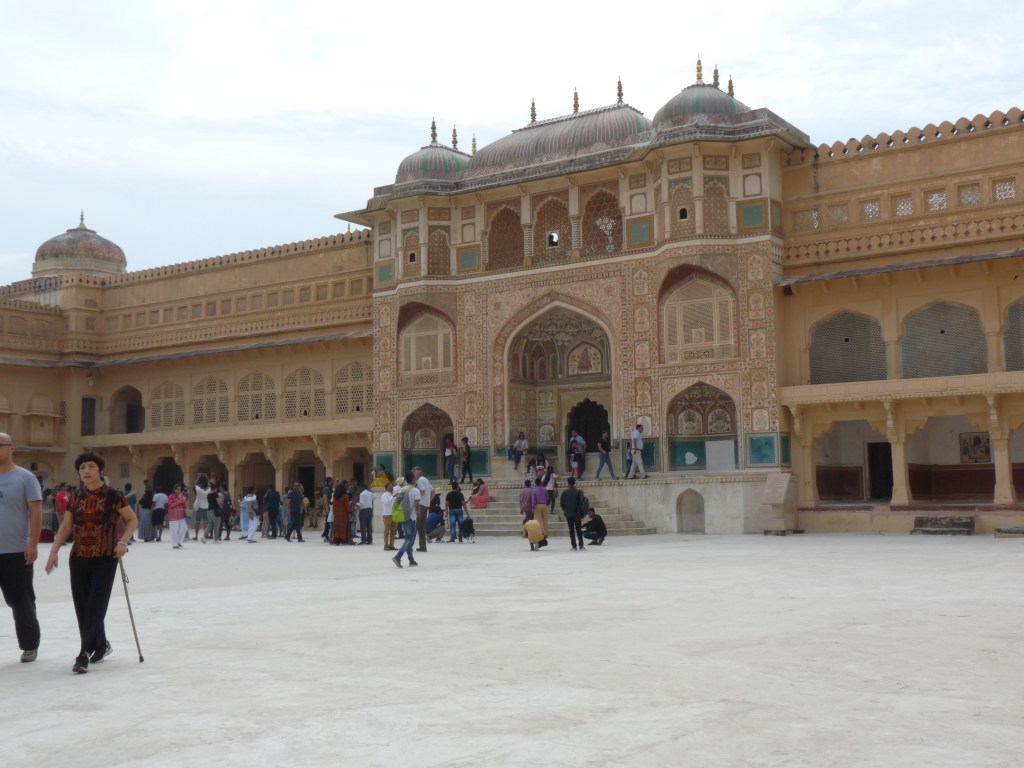
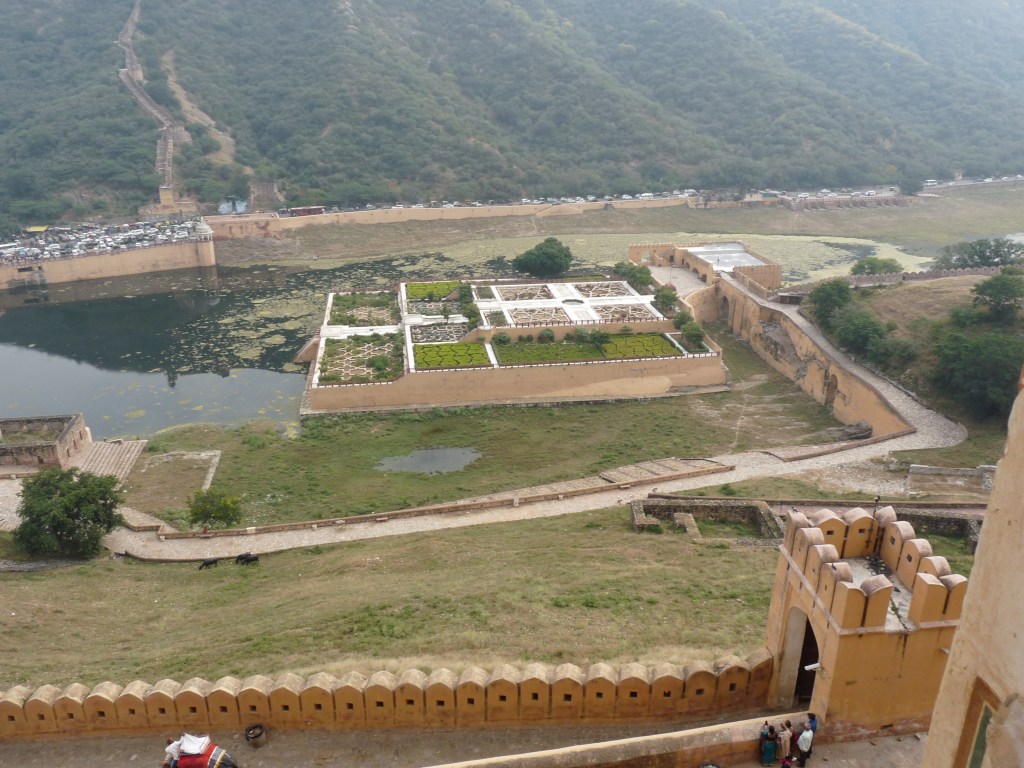
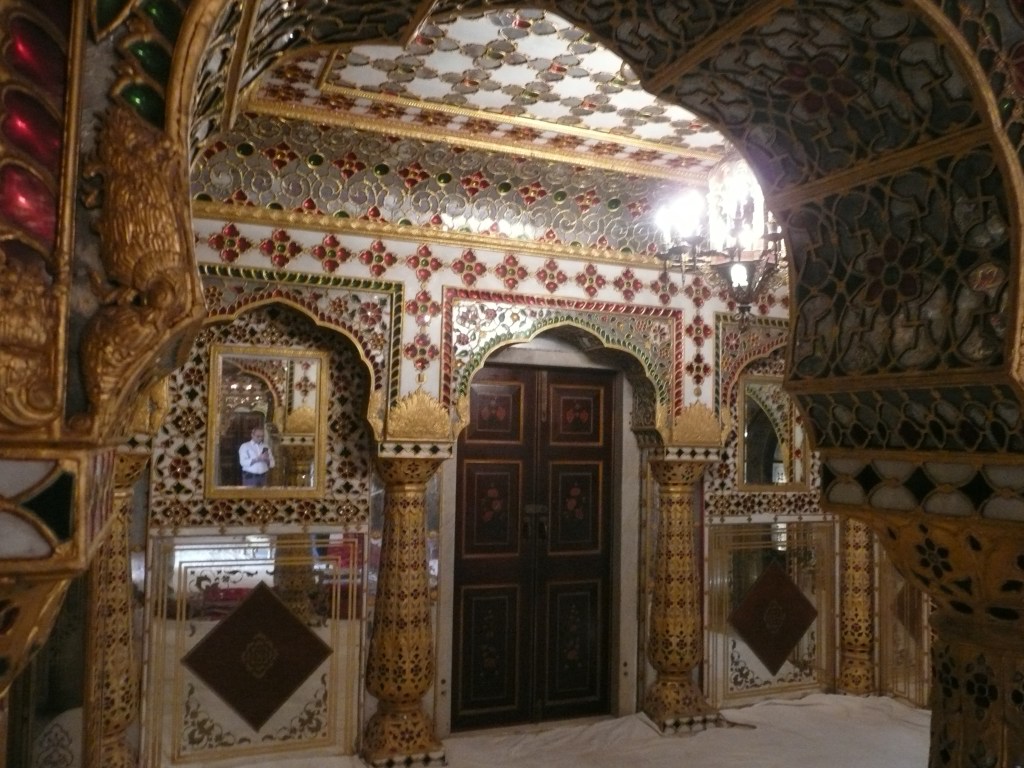
The Amber Palace itself was well worth the effort. It’s about seven miles outside of Jaipur, built of sandstone and marble around 1592 and laid out on four levels. In the King’s quarters there was an early form of air conditioning with holes in the walls allowing air to blow onto flowing water that ran through a channel in the floor. Rose petals were added to the water to give what the audio tour described as ‘a scented cascade throughout the palace’.
Further in there was the ladies only area. The queen lived on one side and the other ladies of affection lived on the other. There was a discreet passageway to the rear allowing the ladies of affection to attend to the King’s needs without being seen by the Queen although as one tourist commented pithily, she probably didn’t give a ****.
Not only did the architects come up with air conditioning,
they were also masters of camouflage. The arched courtyard was seen as a potent
symbol of power back in the day and the Mughal enemy decided it needed to be destroyed.
The cunning locals saw the Mughals coming, draped the area with bland fabric
and the Mughals were so surprised how boring it all was they just turned around
and went home. That’s what the audio tour said anyway so it must be true.
You could do a nice conversion job on this.
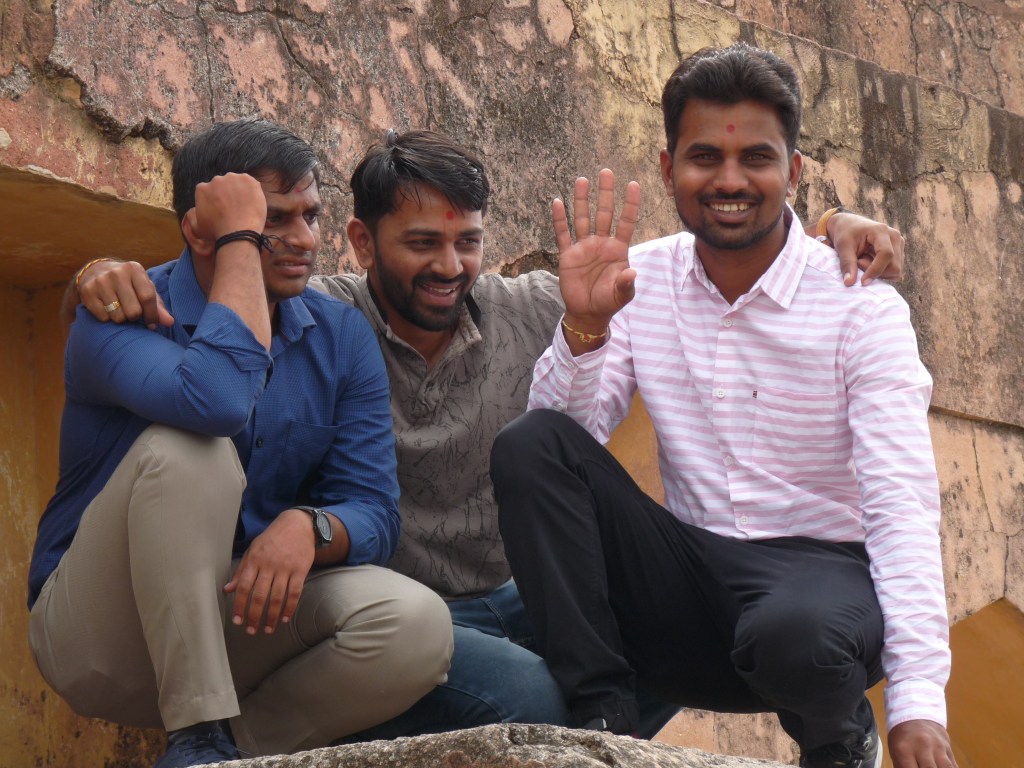
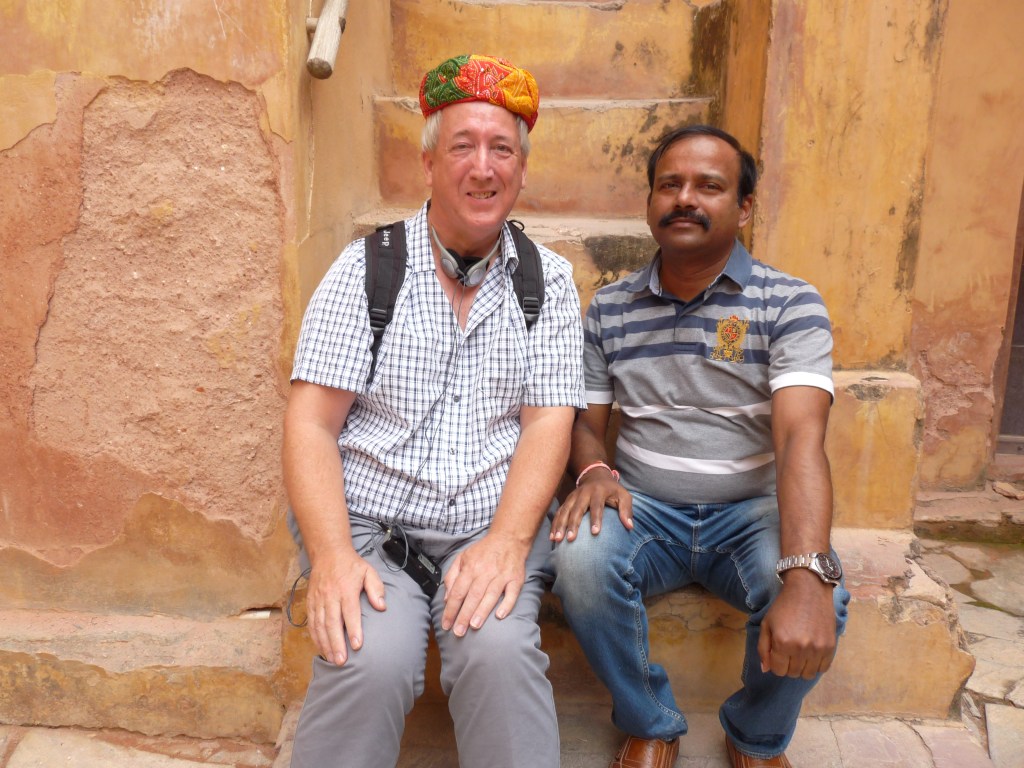
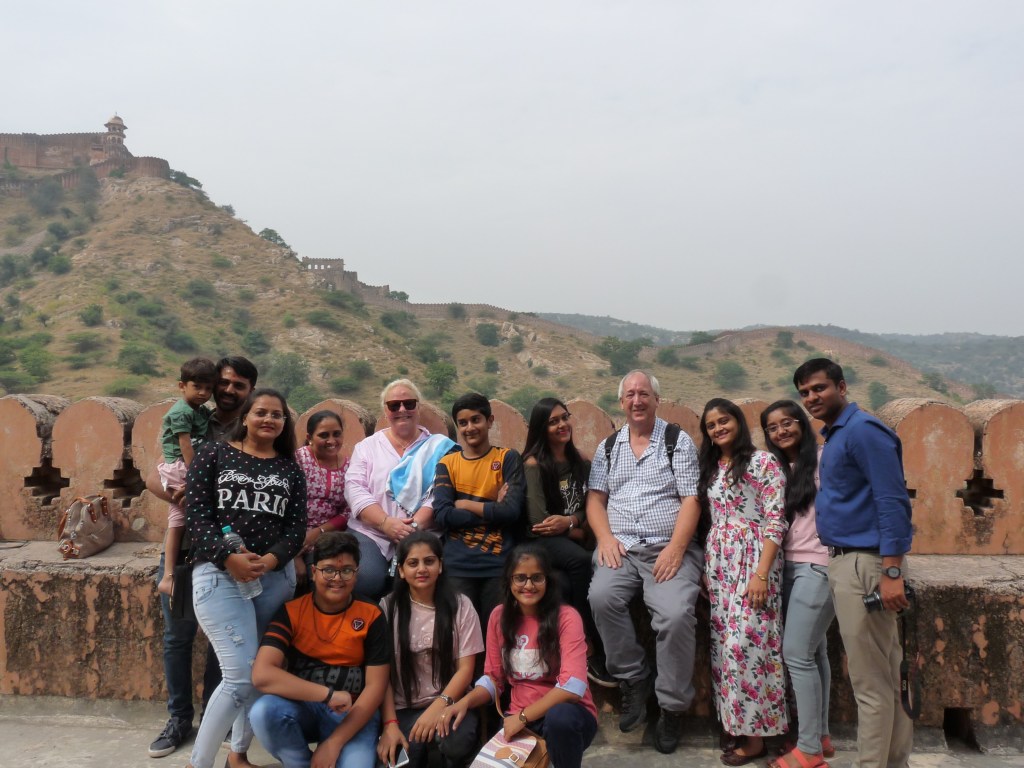
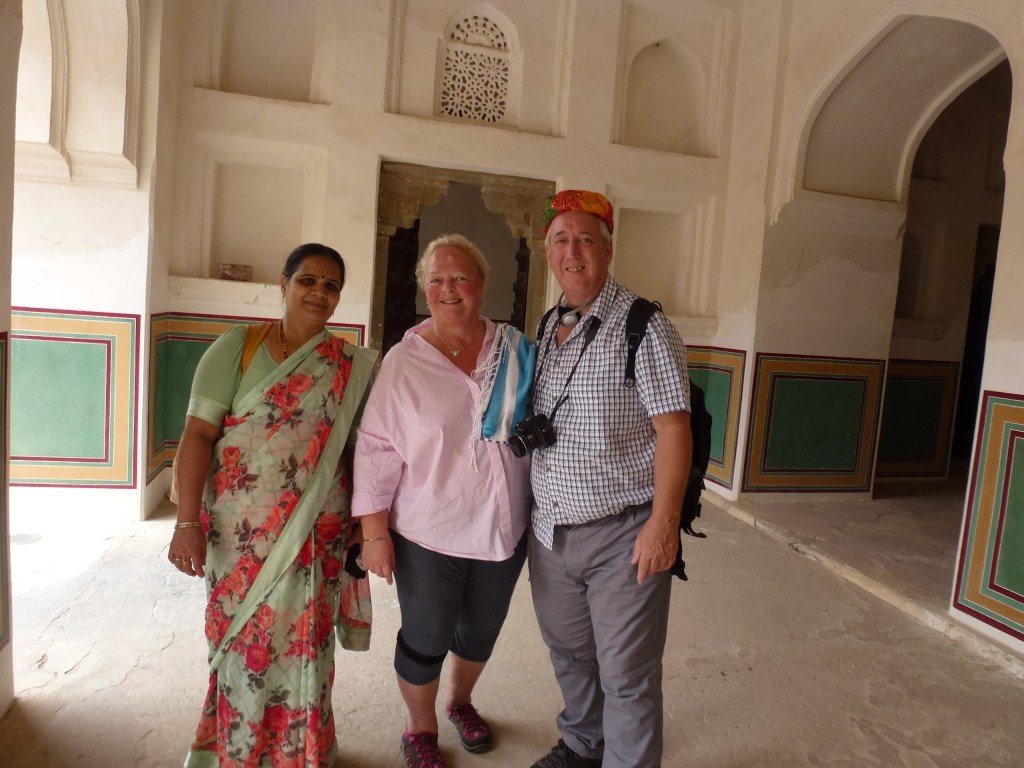
What I really liked about the place was how sociable it all was. People wanted to chat to us and often wanted a photo as well. One person even gave me his hat.
They are a friendly lot in Jaipur
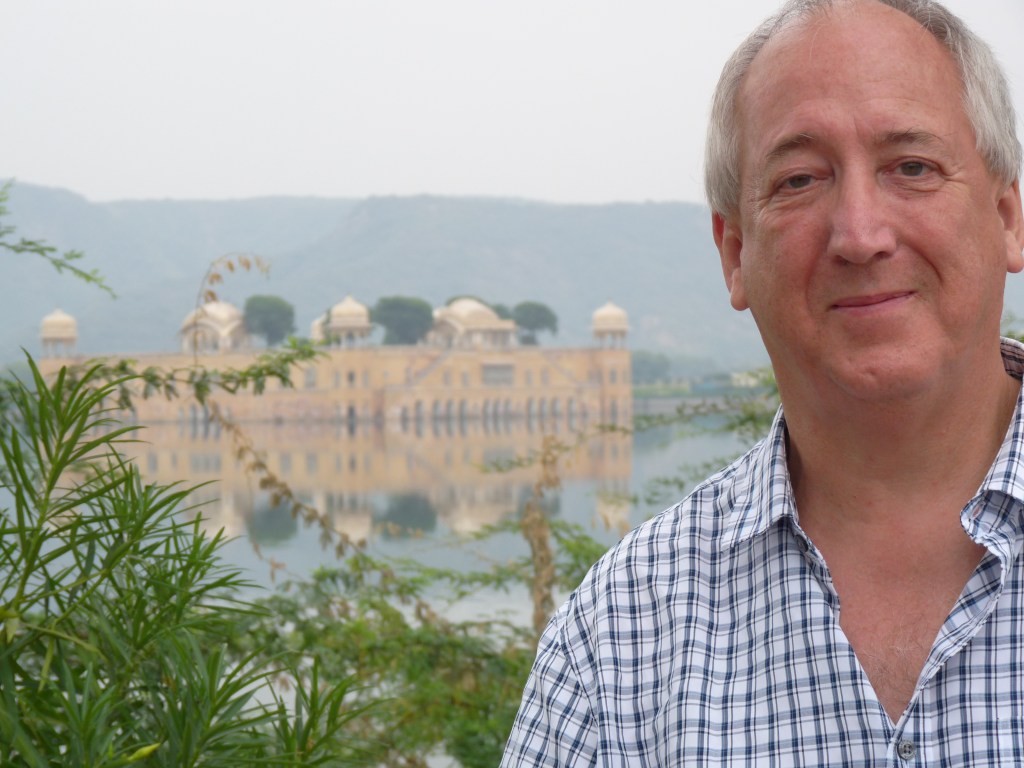
On the way back from the Amber Palace we stopped off at the Water Palace, Jai Mahal. You can’t visit the site and it’s not clear when it was built but it’s a five storied building, four of which remain underwater when the lake is full. So a little rising damp but at least it’s pretty.
We finished the day at the Monkey Temple where I was given good
karma and turned into a Power Guru by the priests in competing temples.
In case you ever need good karma, the secret is to pour a
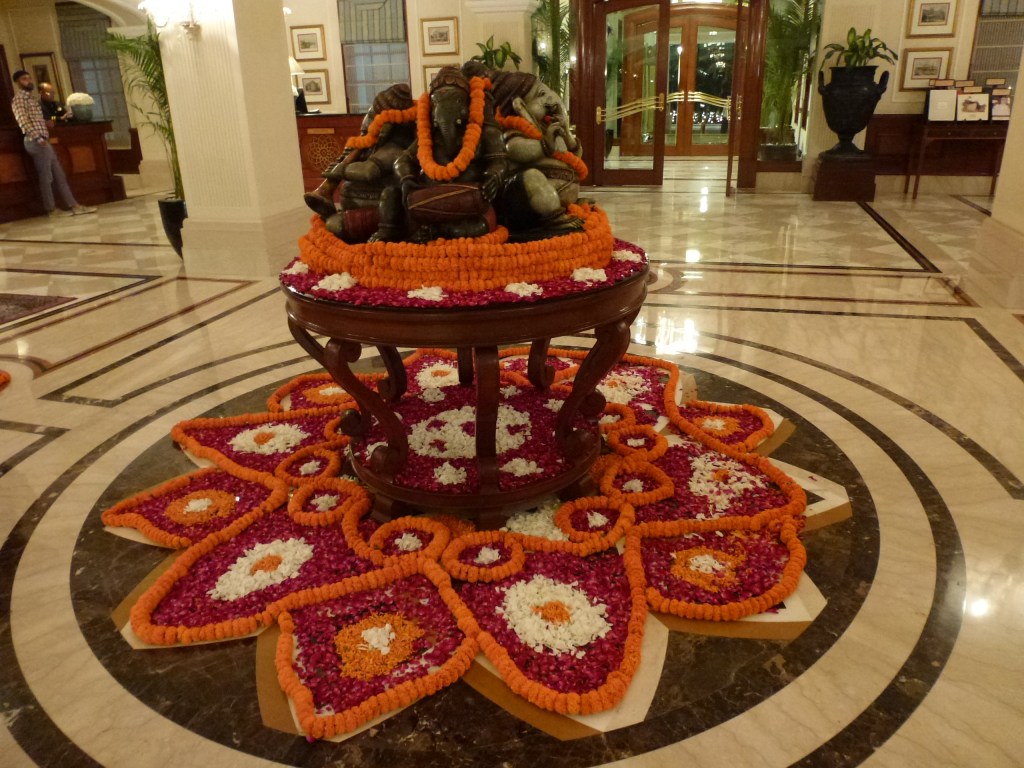
bowl of water over some marigolds. Then have a priest wave a coconut around
your head three times, say a few magic words, tie a bit of string around your
wrist, put a blob of dye on your forehead and hold his hand out in a palm up
position.
In case you ever need to become a Power Guru it’s much more
sophisticated. Instead of the coconut the priest needs to hit you over the head
six times with a bunch of peacock feathers with no advance warning.
I’d hate anyone to think this was some sort of money making scan though. When the Guru Giver eventually realised I was telling the truth when I said I had no money on me, he gave me five rupees out of his own pocket for good luck. I couldn’t believe it. The good karma was working already.
If the Monkey Temple was in Britain, the owners would no
doubt make sure it was spotless to help draw in the punters. Let’s just say it’s
very much not in Britain and leave it at that.
The buildings are impressive enough though and there must be
something magical about the water because we saw several people fully immersing
themselves in the manky green murk. Personally I’m going to stick to peacock
feather flagellation.
The Power Guru – all powered up
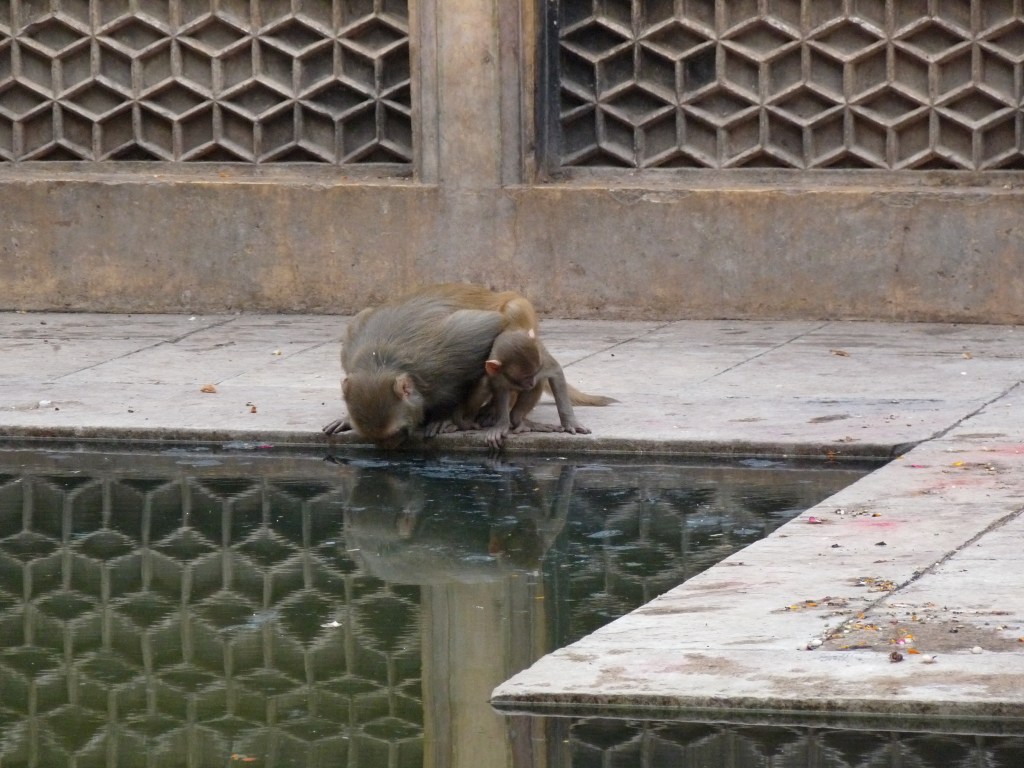
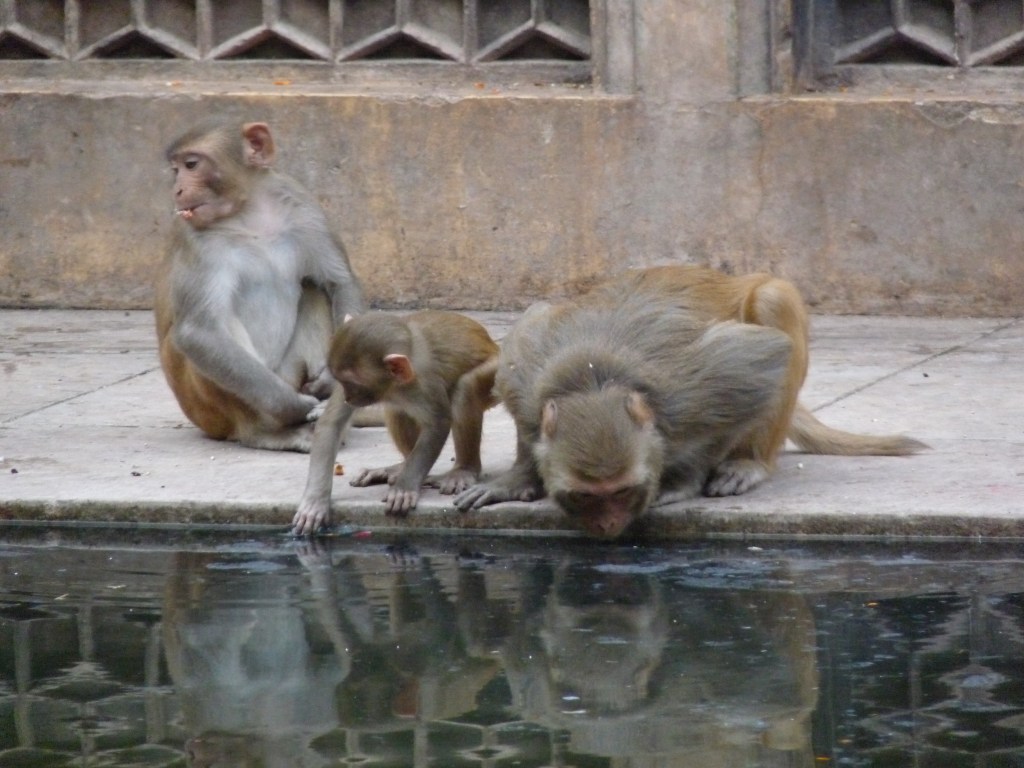
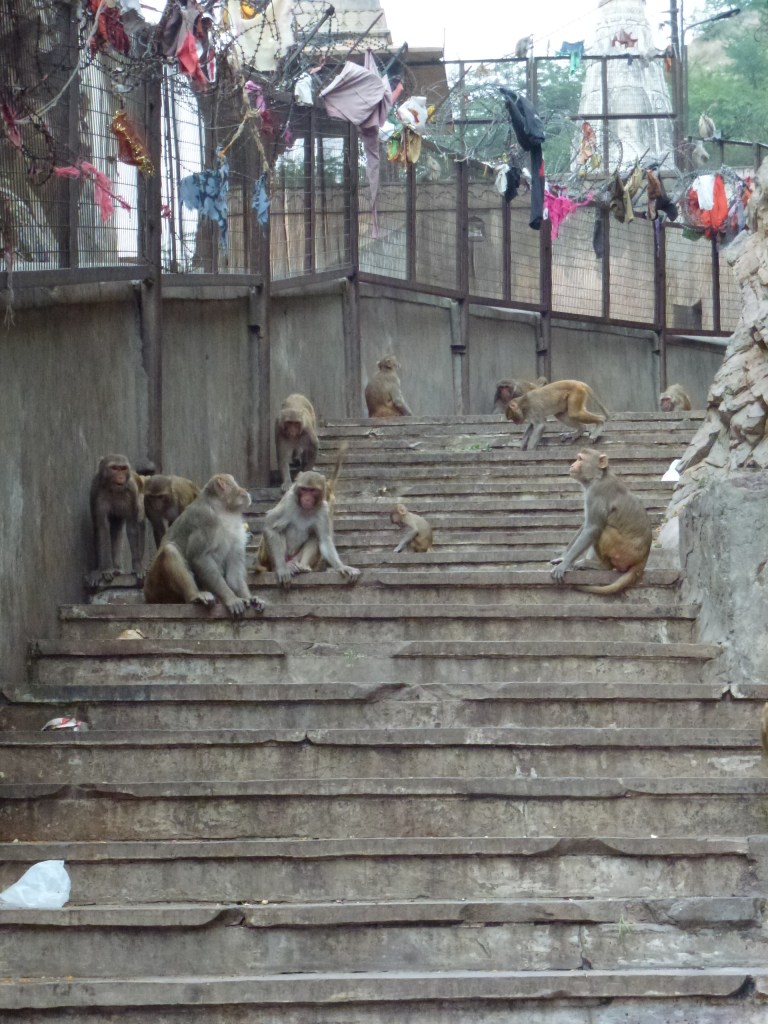
That just leaves the monkeys. And that’s definitely the best thing to do with them. In small numbers they are quite cute. When several hundred of them come running down the steps towards you in one go, it’s quite another thing. The noise on the ground as they ran, the calls and hisses they made and their obvious individual and collective strength made me begin to wonder about the efficacy of my power guru-ness. Shame on me. The good karma kept me safe.
Today was a touristy day. Annette wanted to get some tops
made so we started with a deliberate shopping trip to a fabric place
recommended by our driver. The visit started with a demonstration of block
printing where two guys were doing three-stage prints on long lengths of fabric
at hugely impressive speeds. It then turned out that the company had a much
bigger hand printing place out of the city but no-one every went there because
of the distance so they brought people in to the city to do the demonstrations
instead. We ended up with a very nice block printed elephant at no charge. I’m
not sure the elephant is too happy.
The shop itself was an emporium of quite stunning fabrics
and we had the now ritual ‘please … sit down, let me tell you about …..’. At
first it feels like a hassle when all you want to do is browse around but I’m
starting to warm to the idea that it might actually be a genuine courtesy as
well as a softening up exercise.
Annette decided on two different fabrics and a pattern she liked,
we did the bartering, they measured her up and five hours later she picked up two
hand made tops that she’s delighted with. We’ve not really been in enough shops
yet to know if what we paid was a good deal or not but when I was out of the
way, the guy who was serving us asked Annette what I did for a job, said ‘that
explains things’ and that a good deal is when both parties come out feeling slightly
unhappy. I think that meant we did okay.
I must be going soft though. When I came to pay I included an extra fiver as a Diwali gift in the hope that it helped the shop have a prosperous and affluent year. Surprisingly, it made the heart feel good.
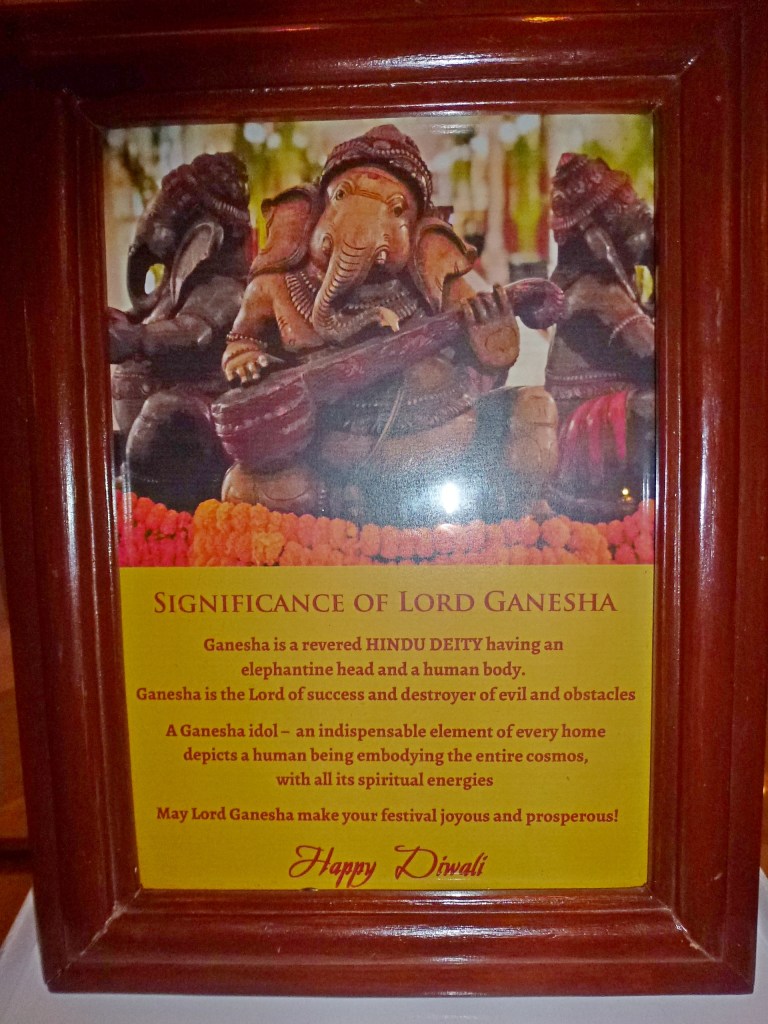
Happy Diwali
We used to be able to buy milk fresh from the farm on the
Isle of Wight until people were hospitalised because the milk hadn’t been pasteurised.
No such risk here. On the way from the shop we saw people on scooters carrying
churns of milk directly from the farm to the shops. Our driver was rightly
proud of how quickly the milk got from the farm to the consumer and told us
that the way the buyers test the quality of the milk is by putting their finger
in it. If the milk stays on the finger above the nail when they pull their
finger out, it’s okay. If it drains off below the nail it’s not acceptable.
Good to know!
Apparently there are royal families all over the place in
India, often with more than one in each state. The Royal family in Jaipur live
in the Crystal Palace and we opted for a guided tour so that we could get into
some of the private rooms. It was all very interesting and definitely worth the
visit but my favourite snippet of information was about Maharaja Jai Singh who took
the throne in 1699 at the age of just 11.
How the other half live.
He was by all the accounts of his PR team, much wiser and wittier than most people of his age and an equally brave soldier. A Mughal emperor bestowed upon him the title of ‘Sawai’ which meant 1.25 times superior to his contemporaries. The title adorns his descendants to this day.
I love the precision of that. One and a quarter times as
smart as other people.
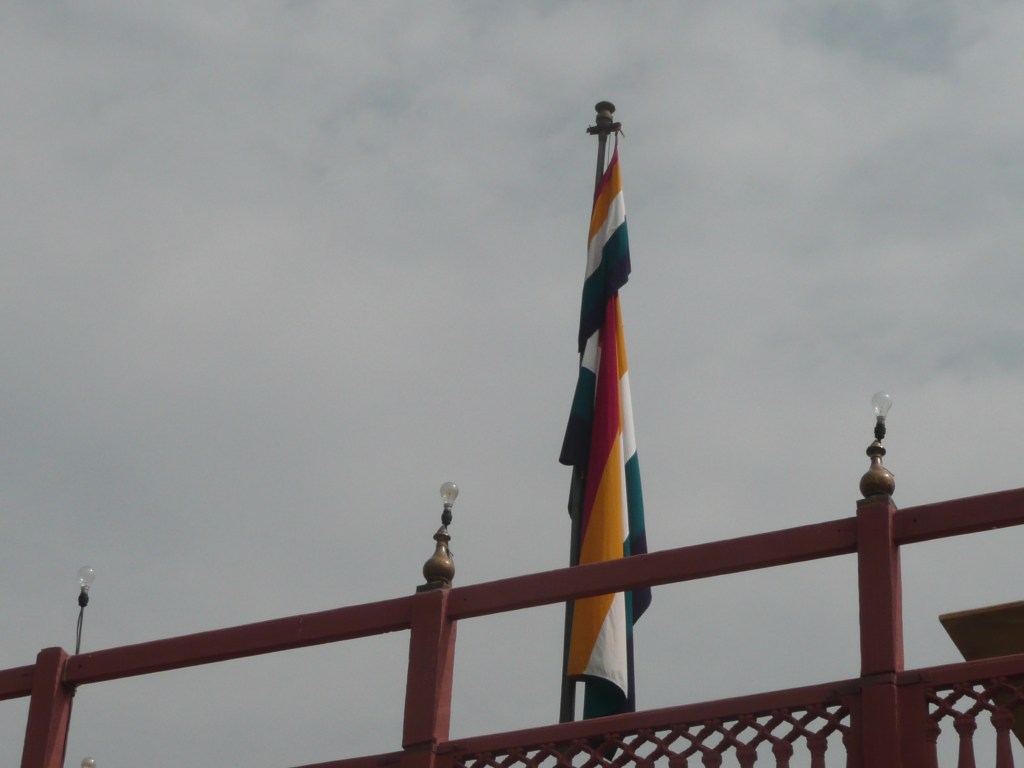
I also love how the precision is reflected in the palace. The royal flag flies all the time but if the Royal family is at home, they also fly a second flag above the first with the second flag being exactly one quarter the size of the first.
1.25 flags – and never a wind when you want one.
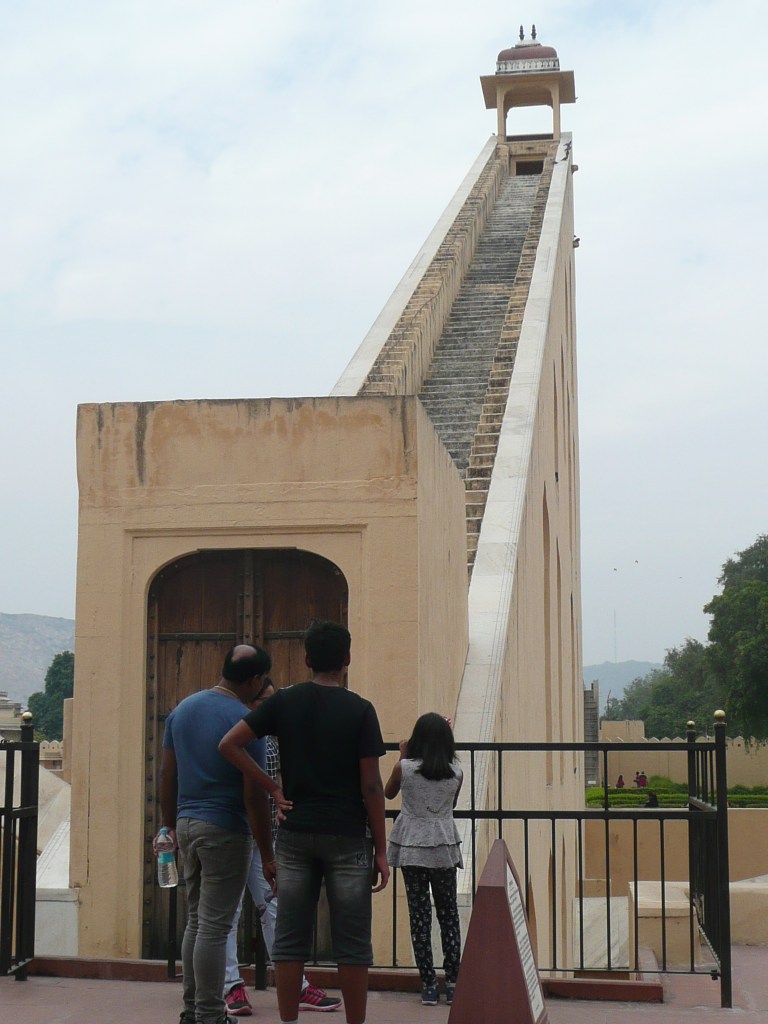
There’s another hidden gem in Jaipur, not far from the
Crystal Palace, known as Jantar Mantar. That should be the name of a character
in Star Wars but it is in fact the Astronomical Observatory of Jaipur which was
started in 1727 to enable Maharaja Jai Singh identify auspicious dates. It houses
numerous astrological instruments including sundials, and water clocks and if
that sounds dull, try this. The Great Equatorial Sun Dial is 44 meters long and
27 meters high. That not only makes it the world’s largest sun dial, it shows the
time to an accuracy of two seconds.
Not much use as a wrist watch though.
1727 Fitbit
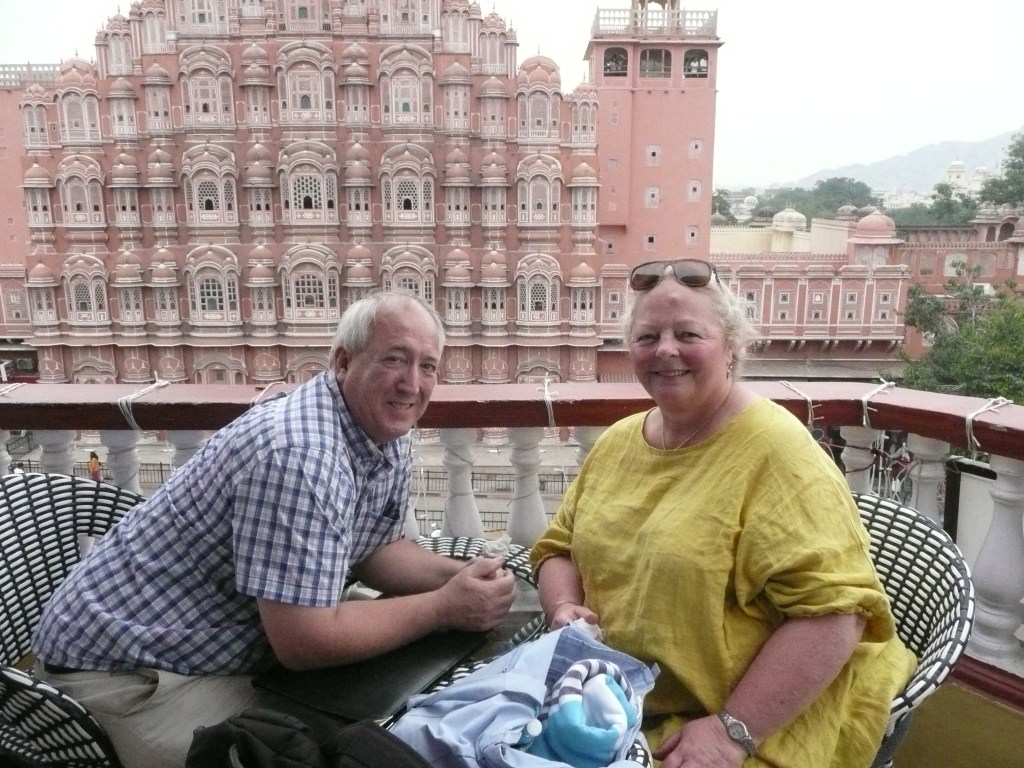
There’s a third famous place in Jaipur called the Palace of
the Winds and a café opposite called the Wind View Café. The Palace was built
in 1799. It has 953 windows and was built as part of the woman’s section of the
City Palace to allow the ladies to watch the streets below unobserved whilst
remaining cool from the breeze blowing through the latticework. Our driver told
us there was nothing inside worth seeing and we were getting weary by that
point so we just viewed it from the café on the other side of the road.
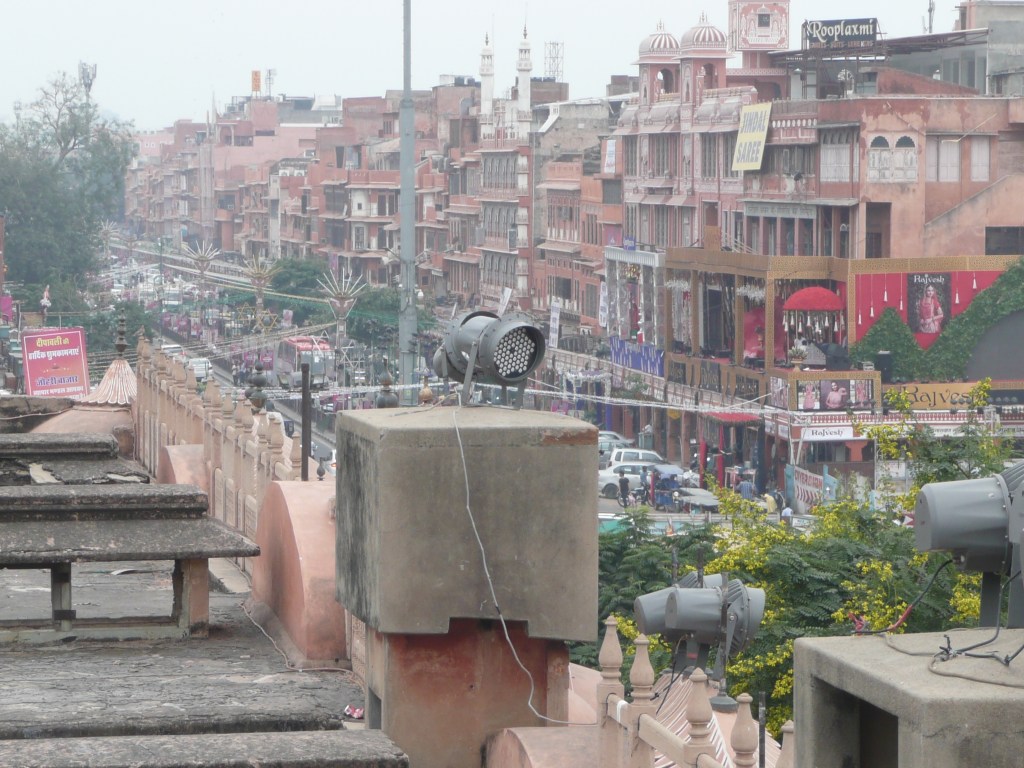
Four floors up, past a very persistent jewellery shop owner who kept coming and telling us (based on no knowledge whatsoever) that our food was nearly ready and that we could then we visit his shop on the way down. The food was good, the steps worth the effort …. but the noise. The combination of street music, the beeping of car horns and the noise of people below meant that we had to shout to the waiter what we wanted to eat. Exciting and invigorating certainly. Restful … not at all.
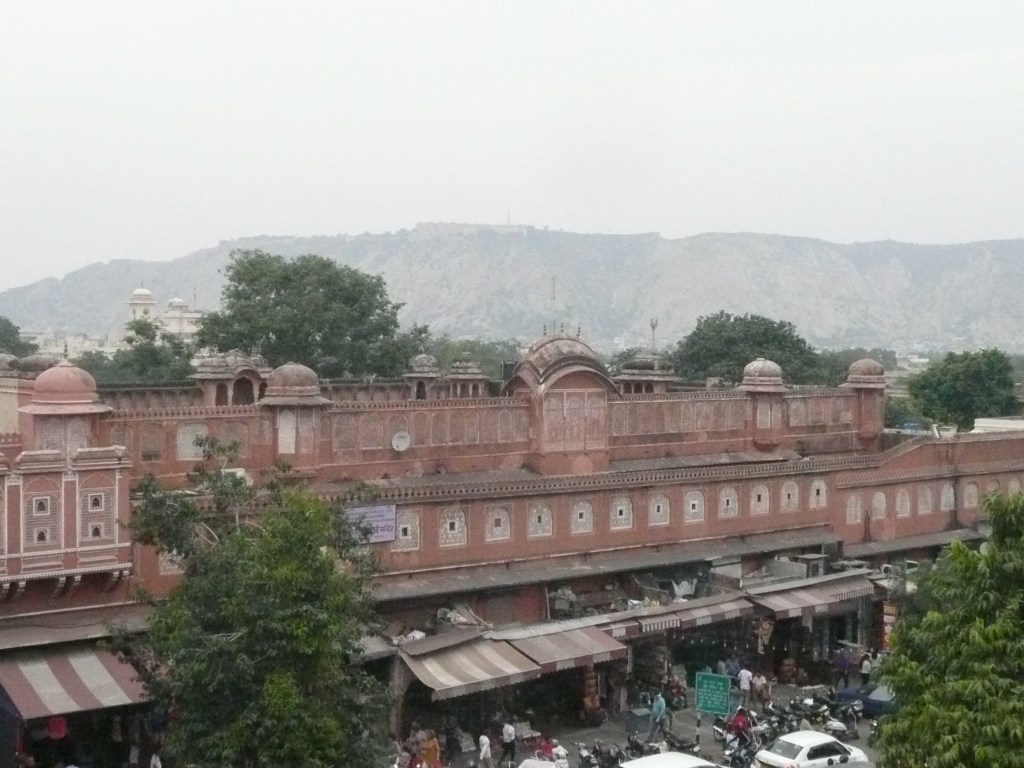
The view from the Wind View Café The tranquil oasis of the Wind View Café
More fireworks tonight. These guys really are happy to see us.
We’d arranged for a driver and car to take us around for our
trip, which sounds grand but is incredibly cost effective. He picked us up on
time, drove us the 260km from Delhi to Jaipur and dropped us off at our hotel.
So not the most thrilling way to spend the day.
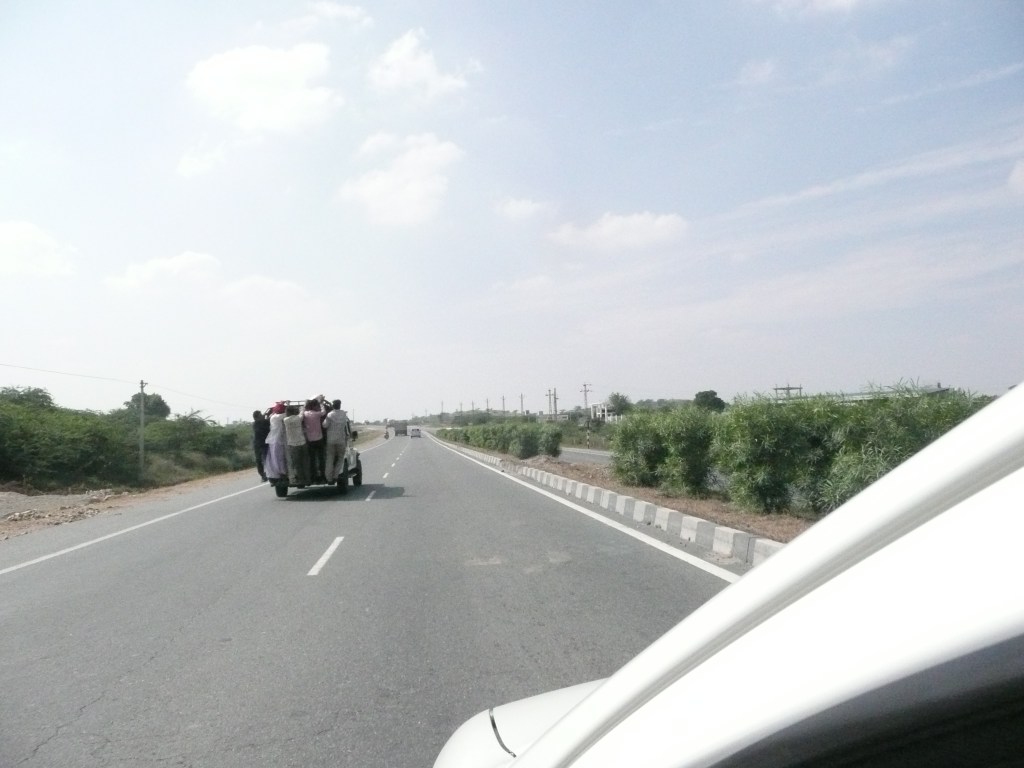
Except that there is always something to learn from looking
out of the window.
It’s basically two roads from Delhi to Jaipur, all toll motorway
and all a microcosm of the preconceptions I’ve brought with me about the
country. Most of the first 100km or so
is completely built up along the side of the road with a combination of shanty
shops in what appear to be half length garages, accommodation and rubbish
heaps. But interspersed with those at frequent intervals are medium rise
apartment blocks, one-off modern hotels, entrances to industrial parks and upmarket
shops such as a Jaguar car show room.
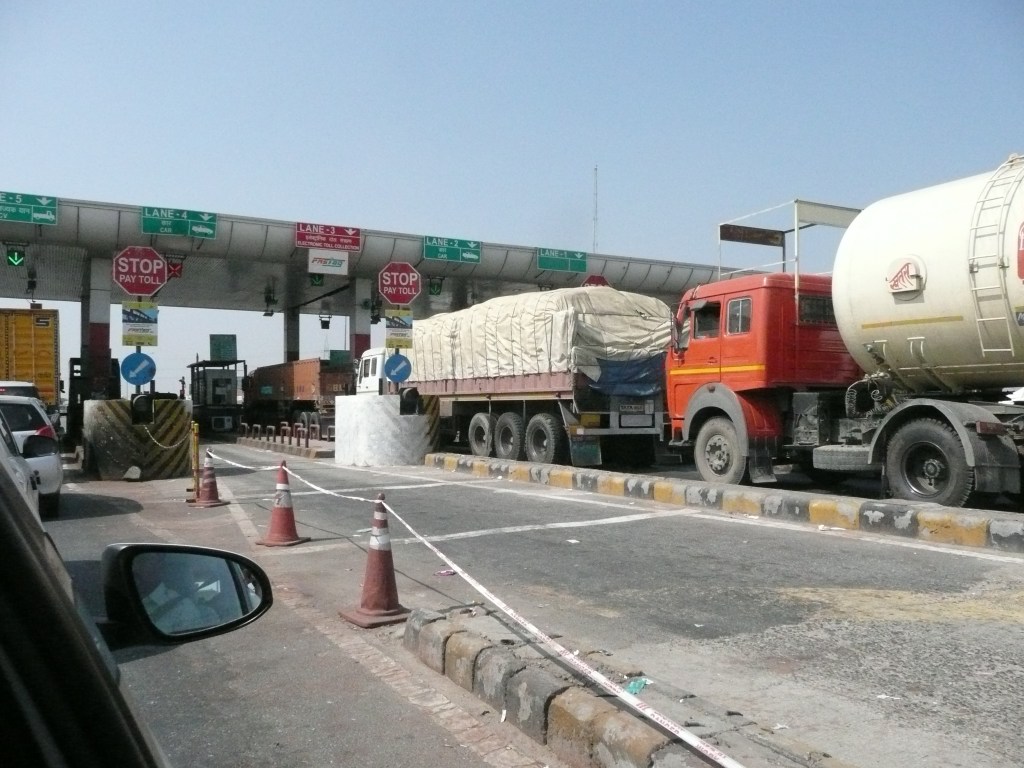
There are also huge numbers of petrol stations and truck
depots. I tried counting the trucks for a while but had to give up. There were
never fewer than fifteen or twenty vehicles at a time, sometimes three of four
times that number with depots no more than ten minutes apart and often much
more frequently than that. There were some trucks on the road but most were
laid up because of the Diwalhi holiday. They will all be back out there on
Tuesday and that has to add up to thousands of trucks normally on this one road
every day.
It makes you think. We might be trying to save the planet
one lightbulb at a time in the UK but we’ve not got a chance of tackling global
change until we can bring the big players into the game. Delhi has a population
of 20m, Jaipur has 5m and that’s more than a third of the UK population right
there. India as a whole has some 20 billion
The scale of global change needed was not a perspective I
was expecting this early in the trip.
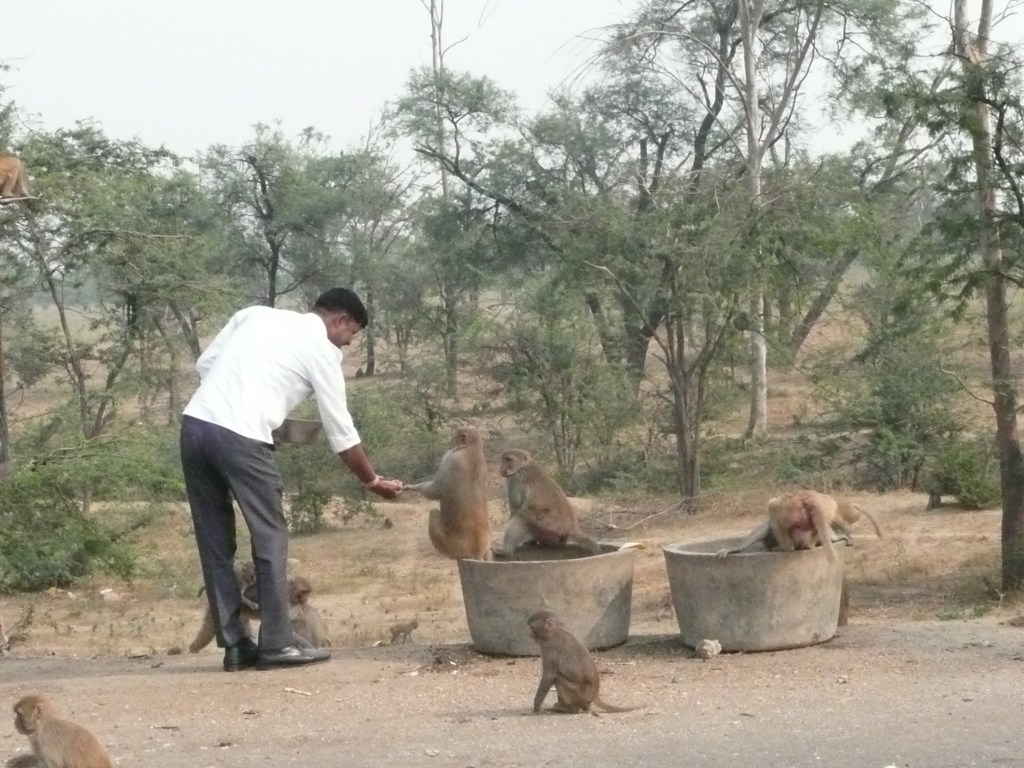
Once we’d got over the half way mark, things became more rural. There was one area in particular that felt very calm and special for no obvious reason and then the feeling disappeared. Shortly afterwards our driver, Santos pulled over to feed the local monkeys and also shared some bottles of water with kids who came up to the car. When we were talking about this afterwards he explained he often did it ‘because it made his heart feel good’.
Santos feeding his heart
Jaipur itself dates back to the 12th century and was the first
planned city in Northern India. The guide book says it was planned in a grid
system of seven blocks of buildings with straight avenues lined with trees with
the whole area surrounded by high walls pierced with ten gates. That’s true and
the area has a lot of chaotic charm but it does belie the growth that’s taken
place beyond the walls which has led to daily jousts as scooters, cars, and
tuk-tuks battle to get in through the gates.
The guide book also says that the buildings are uniformally rose pink and that the colour was chosen after several experiments to cut down the intense glare from the reflection of the blazing rays of the sun. Terracotta orange would be closer to the mark but pink apparently symbolises welcome, so pink it is.
Welcome to the city of Jaipur
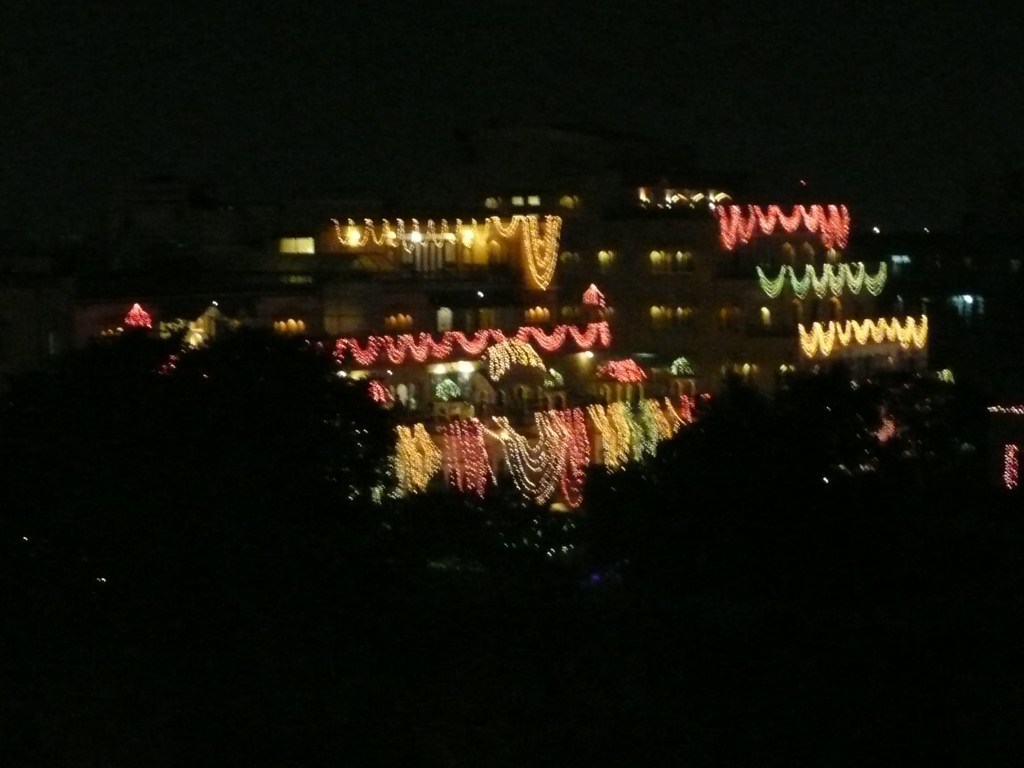
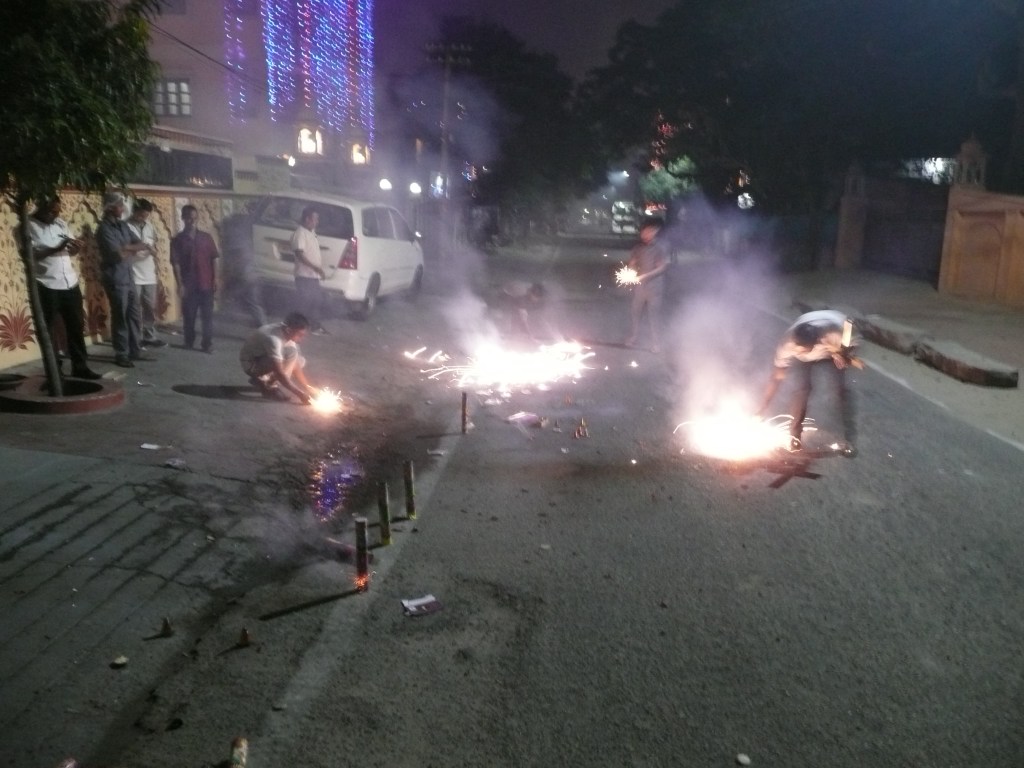
Today was the actual celebration of Diwali, the Hindu festival of light, symbolising the spiritual victory of light over darkness, good over evil, knowledge over ignorance and fireworks over sleep. We had dinner in the hotel’s open air roof top restaurant and seemed to be at the centre of firework displays all around the city which lasted from around 7.30pm until well after one in the morning. It’s all supposed to be about worship to Lakshmi, the goddess of prosperity and wealth. We just thought it was good of them to lay it on for us.
Jaipur by candlelightThe hotel staff getting a little too intimate with loose Catherine Wheels
We started to get our bearings a bit today. There’s Old
Delhi and there’s New Delhi with New Delhi actually being quite stylish and
dating back to the British colonial era of the 20s and 30s and Old Delhi being
something else.
We paid a visit to the famous Red Fort in Old Delhi which is, well a big red fort really, and then we tried to visit the Mosque across the road which can hold 25,000 people at a time. The visit to the fort was strange go start with. If you want to pay by card or via an online method, you can go directly to the entrance. If you want to pay by cash, you have to walk around a kilometre to the other end of the site to buy a ticket and then walk all the way back again to the main entrance.
It’s hot, it’s sticky … it’s at the other end!
It’s almost as though they are trying to tell you something,
except they are aren’t because there are no signs about this anywhere. So it
comes down to the kindness of strangers to work out what you’re meant to do.
Then when it comes to getting in to the place men and women
have to go through different entry points. It’s not a gender issue as such but
more because every public space seems to have security checks. The entry points
for men have men doing the checks and the entry points for women have women
doing the checks. That’s all very
reasonable and sensible but it later dawned on us that travel on the metro is
very definitely male orientated with something like 95% of the travellers being
men. There’s also a strong bias towards it being men on the streets.
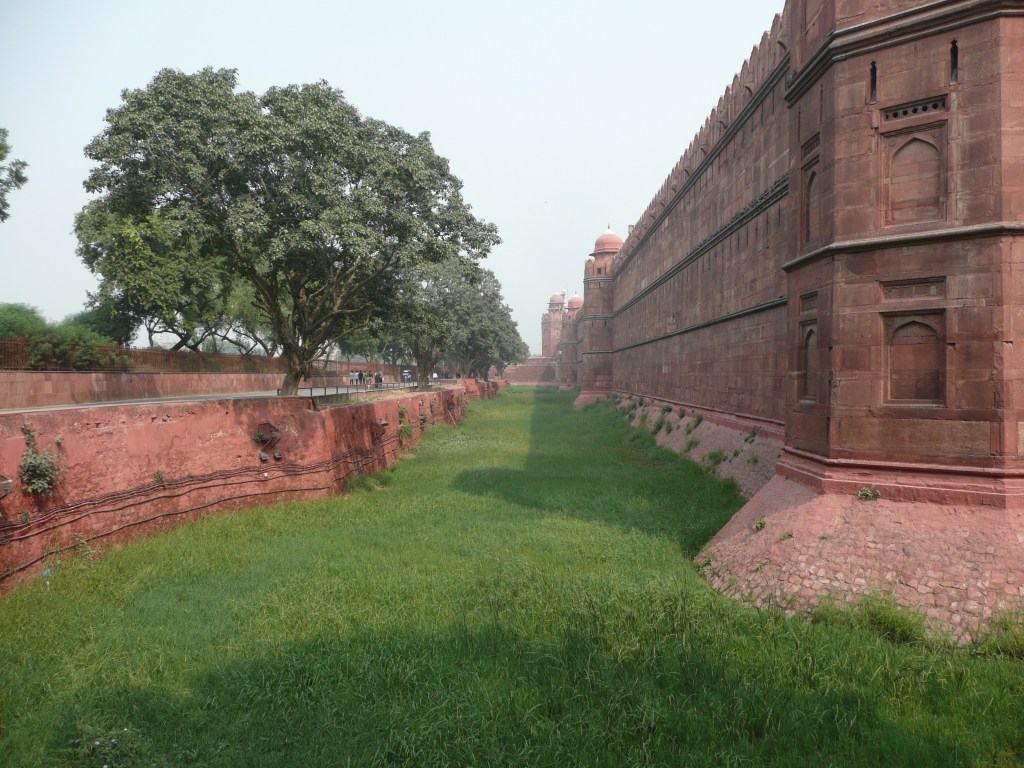
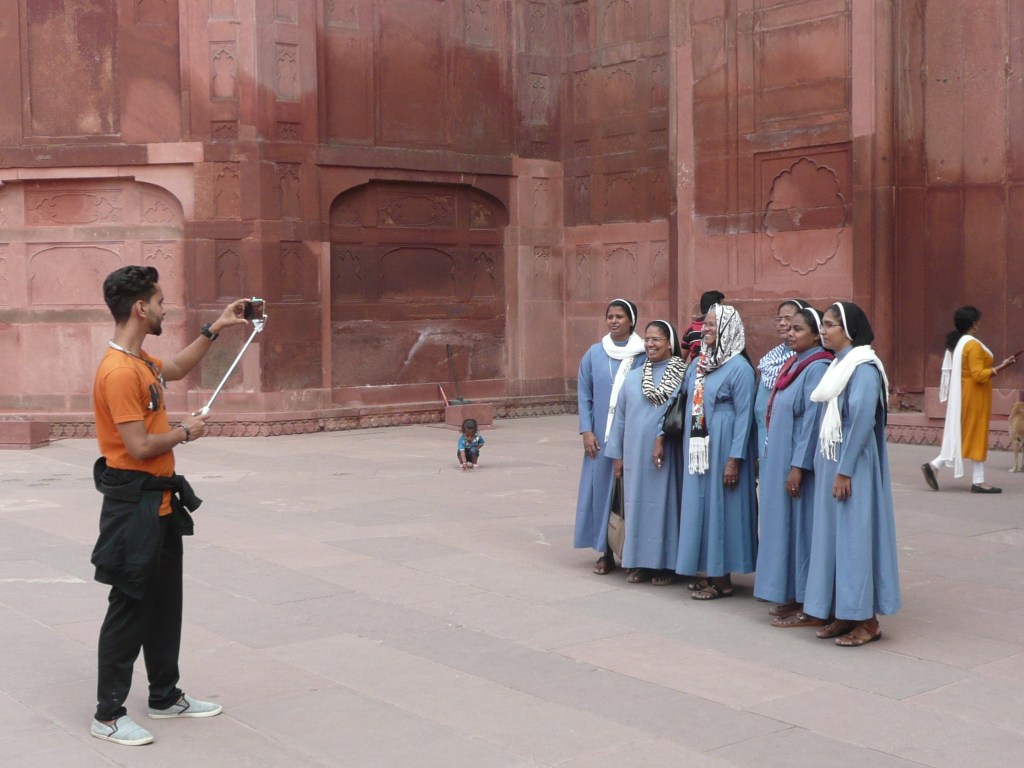
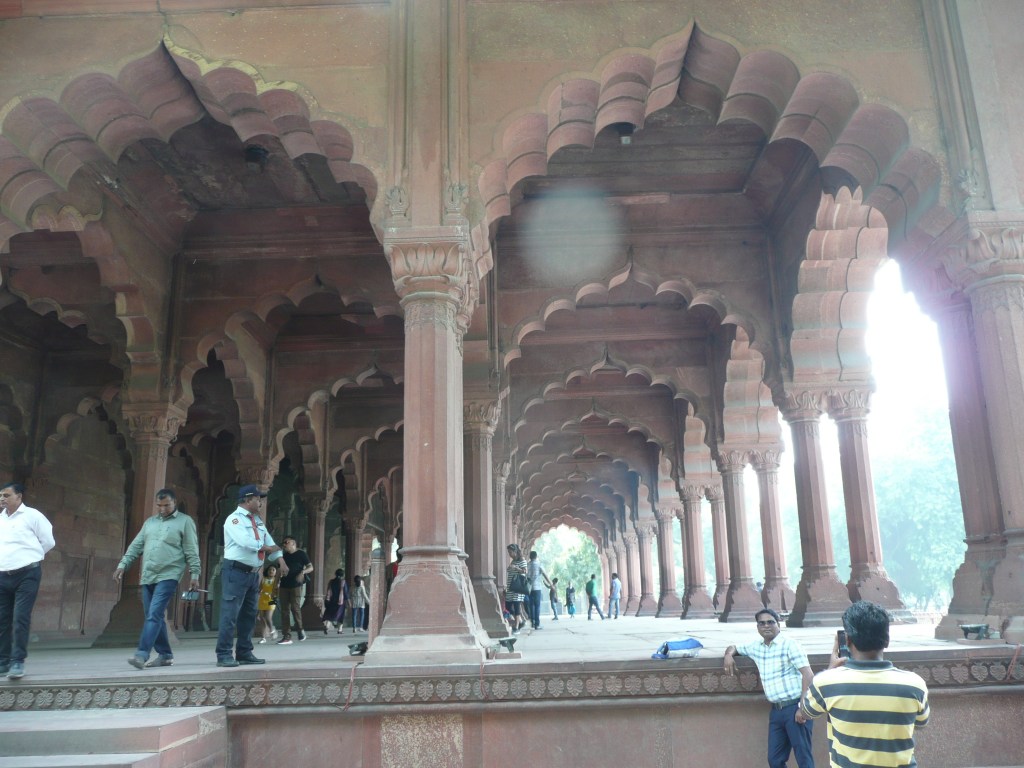
Anyway, back to the fort. Think Warwick Castle in red stone, minus the walk along ramparts and you get the idea. It was built when the then King decided to move the capital of India from Agra (home of the Taj Mahal) to Delhi. His daughter subsequently decided to build a pool between there and the mosque so that she could see the moon reflected in it from the fort. Utterly charming I’m sure until the British turned up and tore it apart.
Sister Act does BolliwoodDave meets his arch nemesis.
I’ve never been to a mosque before so the idea of visiting India’s largest was quite exciting. I’ve still not been to a mosque. There’s an incredibly busy road that runs between the fort and the mosque and you take your life in your hands trying to get across. There was a zebra crossing where we needed to be but in India it turns out that just marks you down as fair game. Not only do the vehicles not stop for people, the motorbikes coming the other way think it’s fun to come down the wrong side of the road to try and score a few extra points.
The mantra we’ve been given elsewhere for roads like this is
‘be brave, keep walking, don’t go back’. The Delhi version is ‘be brave, stop
gibbering, be prepared to stop, scream leap out of the way, and keep praying’.
Not as pithy but a lifesaver.
As for the mosque itself, once we got across the road, we ended up heading down an increasingly dodgy back street immediately behind the site. People were pushing and shoving and it just didn’t feel safe. In the end we bailed out. If God wants to see me, he can pay me a visit on the Isle of Wight. At least it’s easier to get across the roads.
Didn’t want to go the to the mosque anyway.
We decided to treat the rest of the day as an
acclimatisation period. That’s code for go back to the hotel, sit by the pool
and drink cocktails. And watch the red kites.
There’s a family of them that fly around the hotel and dive bomb the
pool area for food. It’s an impressive sight seeing a bird of prey flying off
into a tree with a crockery plate.
There’s a really useful tip to remember when you first
arrive in a new country – the first day is always the most expensive.
It’s difficult and pricey to buy rupees outside of India so
we arrived last night without any cash. The first job today then was to find an
ATM machine.
We’d decided to treat ourselves to somewhere nice to stay
for the start of our holiday so when we asked the concierge where the nearest
ATM was, he decided he was going to show us the way. We hadn’t reckoned on the
fact that, because it’s the start of Diwali, the service tills would all be out
of cash. Four machines later and we were in luck, with luck being a negotiable
concept given the dodgy looking building we were in and the fact that our
genial host felt the need to cover our backs while we used the machine.
Then what to do? Delhi is a huge city and without any real
sense of where we were we jumped into a tuk-tuk and asked for the local
shopping area. It’s possible that there were cousins and brothers of the driver
involved but somehow we ended up in a store that claimed to be a ‘temporary
place’ for a nationally sponsored centre shopping centre helping tribal
families in remote areas.
I’ve no idea if that’s true – but they did have very nice
carpets.
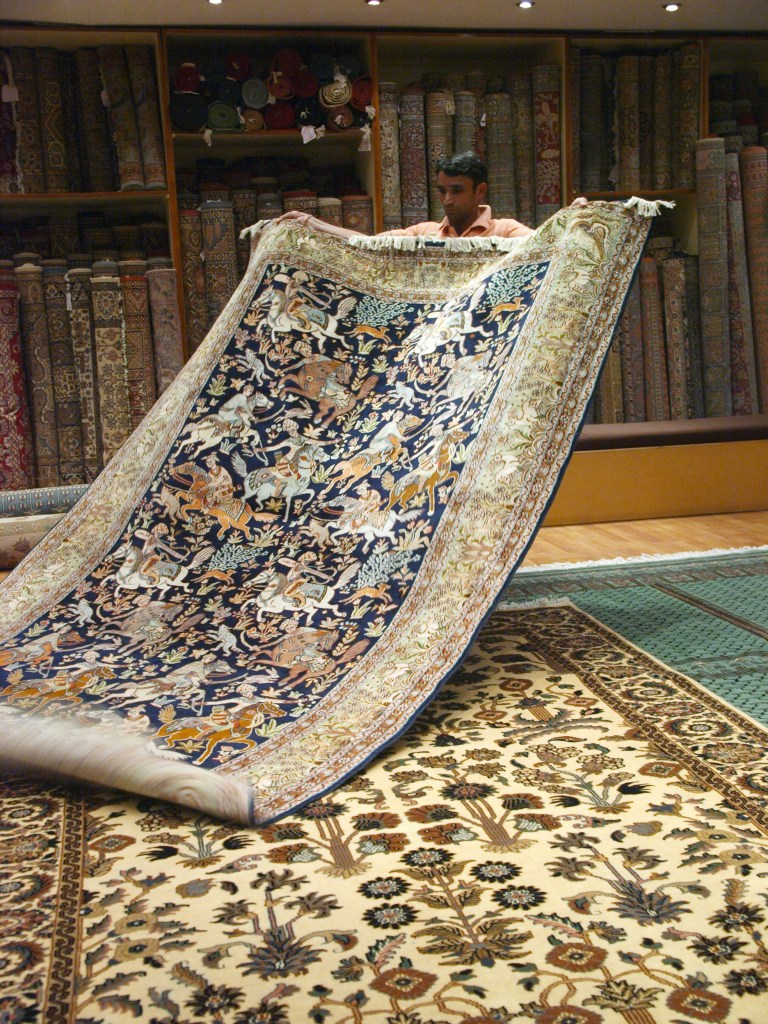
Actually I was blown away. I had no idea that traditionally,
carpets are made by hand one knot at a time. The best have a double back, last
for two to three hundred years (which will probably see me out) and look better
and better with use.
What was really special was that because of the way the
knots are tied and trimmed they lie down at around 45 degrees. That means that
when you turn the carpet from end to end, the colours change in quite a
dramatic fashion. And the guys in the store were really very good at rotating
3m rugs around to show the effect.
In case you’re wondering, we didn’t succumb. But it was close.
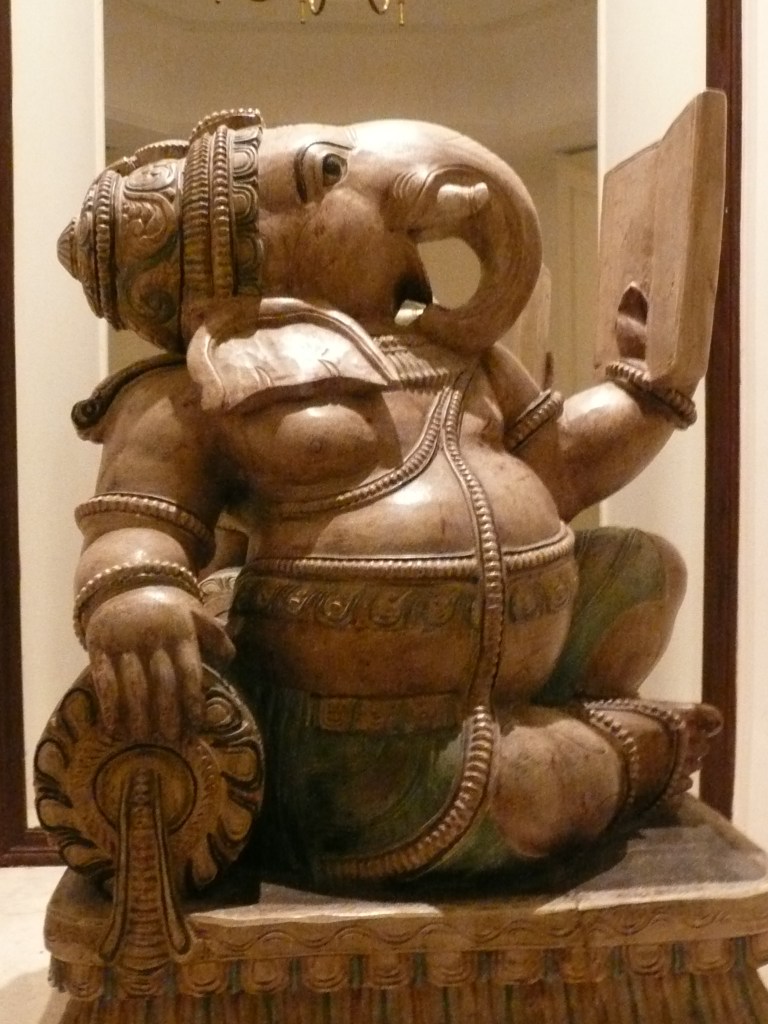
Carpets as far as your eyes can see.Lord Ganesha on a nice orange rug.
Welcome to India, home of the Maharajas’, tuk-tuks and more traffic at midnight than in London at midday. This is the start of Dave and Annette’s tour of bits of India.
Dave with his kindle at the start of the trip.
The flight out from the UK was surprisingly okay, made all
the more passable by the film ‘Yesterday’ about a world with no Beatles, ‘Downsizing’
with a 5 inch Brad Pitt and mini-magnums half way through the journey. We
arrived at Delhi airport around 11.30pm, battled our way through the joys of
immigration and out in to the brave new world.
Delhi airport is the first place I’ve been to where it takes
the nationals three times longer to get through immigration that it does
foreigners. As ever though, there were the sweet, welcoming and smiley faces of
immigration to enjoy first. There must be an international baccalaureate on how
to look grumpy and disinterested for all these international ambassadors.
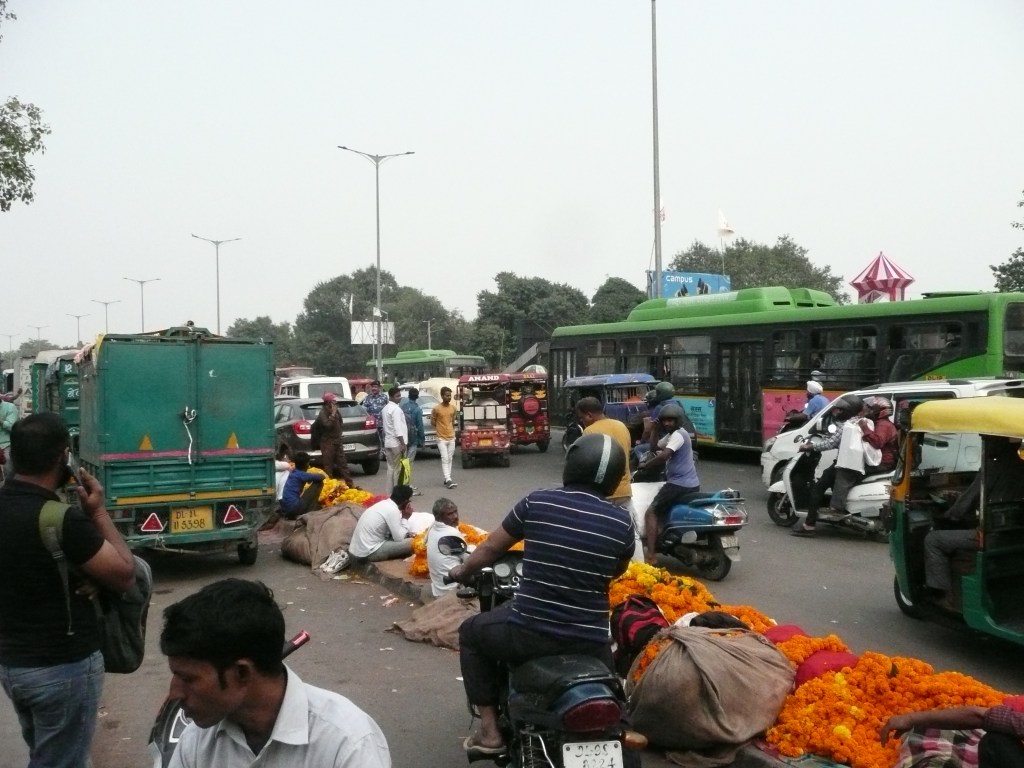
The airport is to Delhi as Gatwick is to London so we had a forty minute drive into city. There were five lanes official lanes of traffic on our side of the road that were chock a block with drivers turning them into seven or eight lanes whenever they got the chance. That’s at 1am. Bonkers.
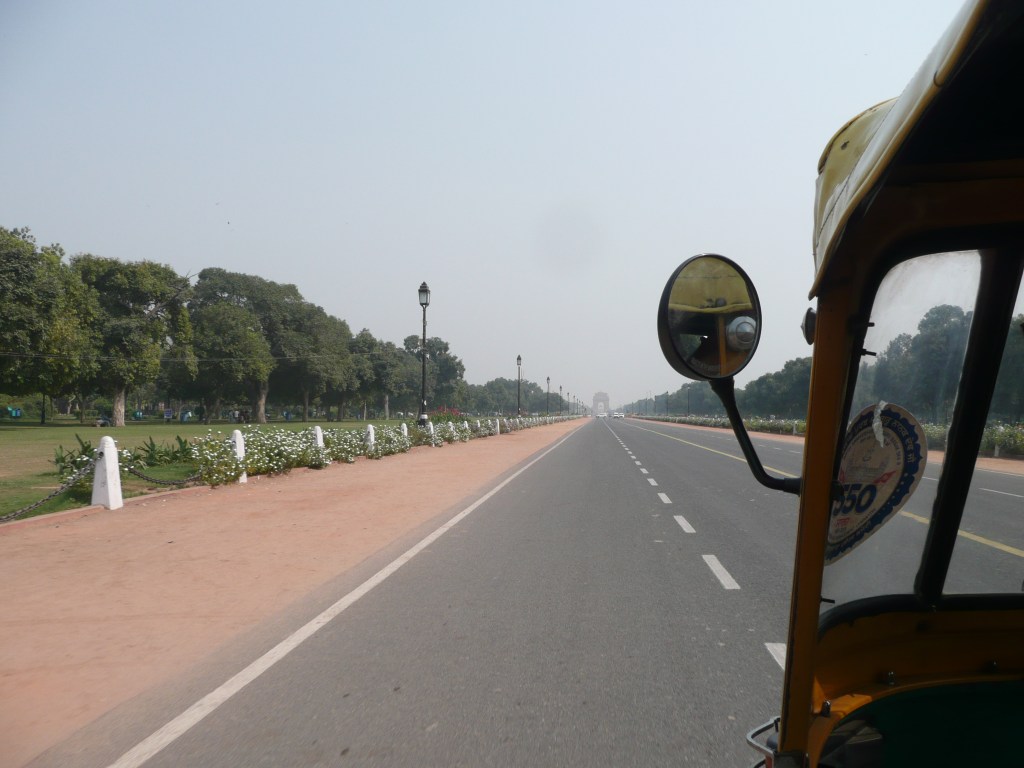
Delhi’s hugely busy roads during the Diwali holiday.
 Dave and Annette in India and Nepal