3rd of 4 posts added on 14/11/19. For continuity from previous postings, start with 11th November 2019.
Temples, bodies and singing bowls.
First Impressions of Kathmandu
Once we’d got out of the airport, our first impressions of Kathmandu were very positive.
It was evening rush hour and the roads were busy, but the mayhem of India was missing. There was far fewer horns sounding. Road users were more courteous. The streets were clean. The shops looked like shops. There were no cows wandering around. Scooter and motorbike users were wearing helmets. There were no tuk-tuks.
And the hotel did a very nice spaghetti carbonara to go with the 7% proof Nepal Ice beer.
Seeing the Sights
Kathmandu is a busy city with a lot to see and we decided to hire a car and guide for the day. Only four stops but what a day.
Swotambhu Temple
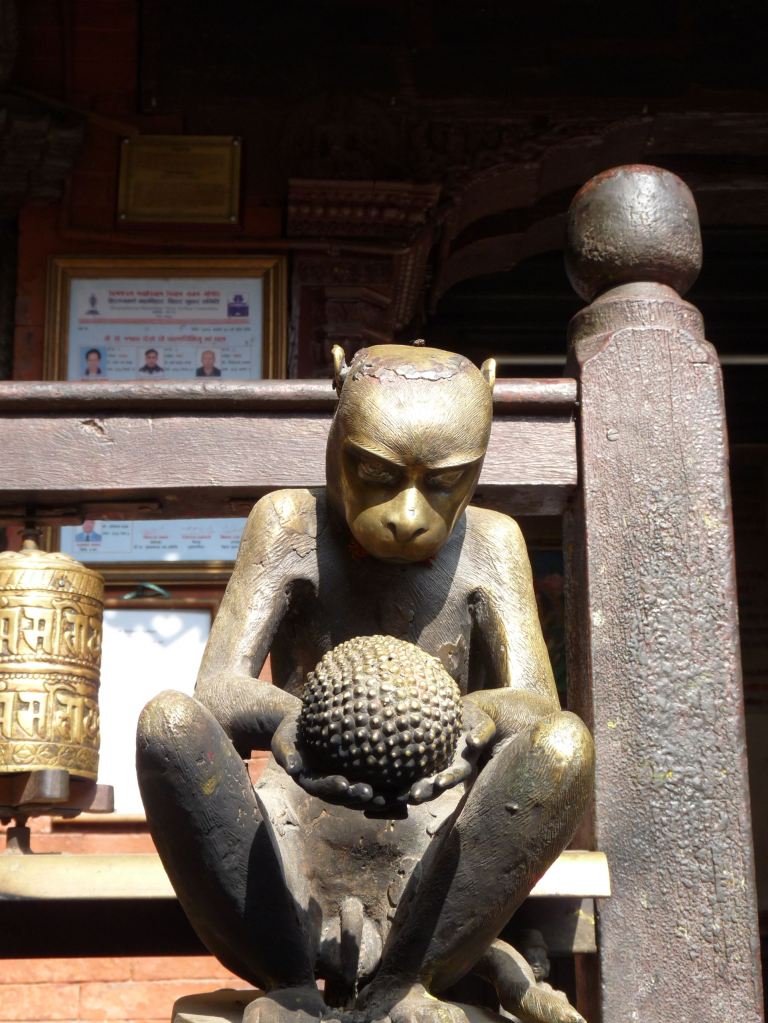
Our first stop was the Monkey Temple. That’s not its proper name but a tourist guide decided in the late 90s that people couldn’t pronounce Swotambhu so renamed it as the Monkey Temple and the name stuck.
It is, inevitably, at the top of a very big hill.
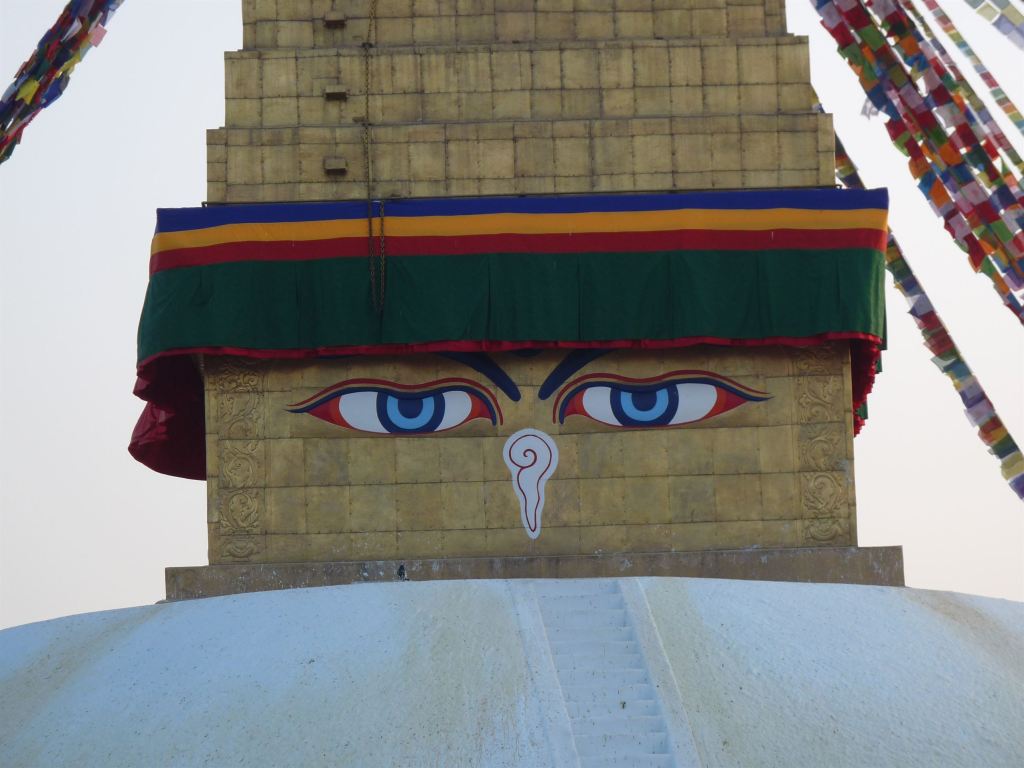
Swotambhu is a Buddhist temple.
- The round white dome is solid and represents the earth.
- The two eyes represent wisdom and knowledge.
- The third eye is the eye of consciousness and represents the point from which enlightenment beyond physical sight is achieved.
- There are thirteen steps to enlightenment.
- The umbrella indicates protection of the world.
- And the spire at the top represents reaching for nirvana.
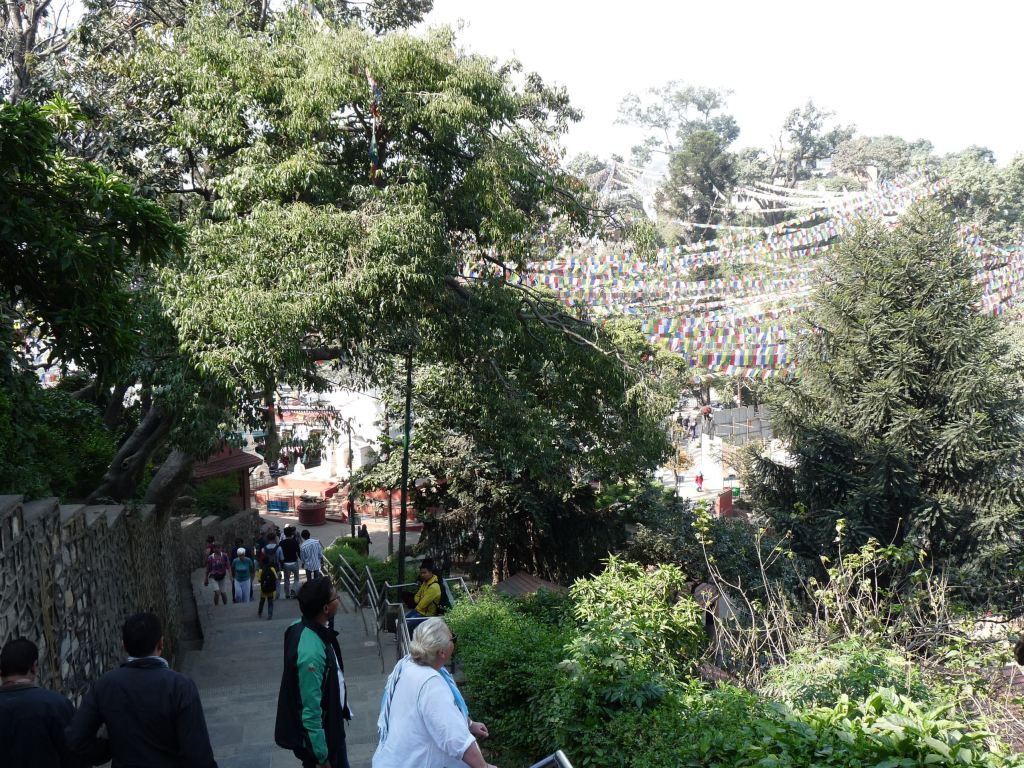
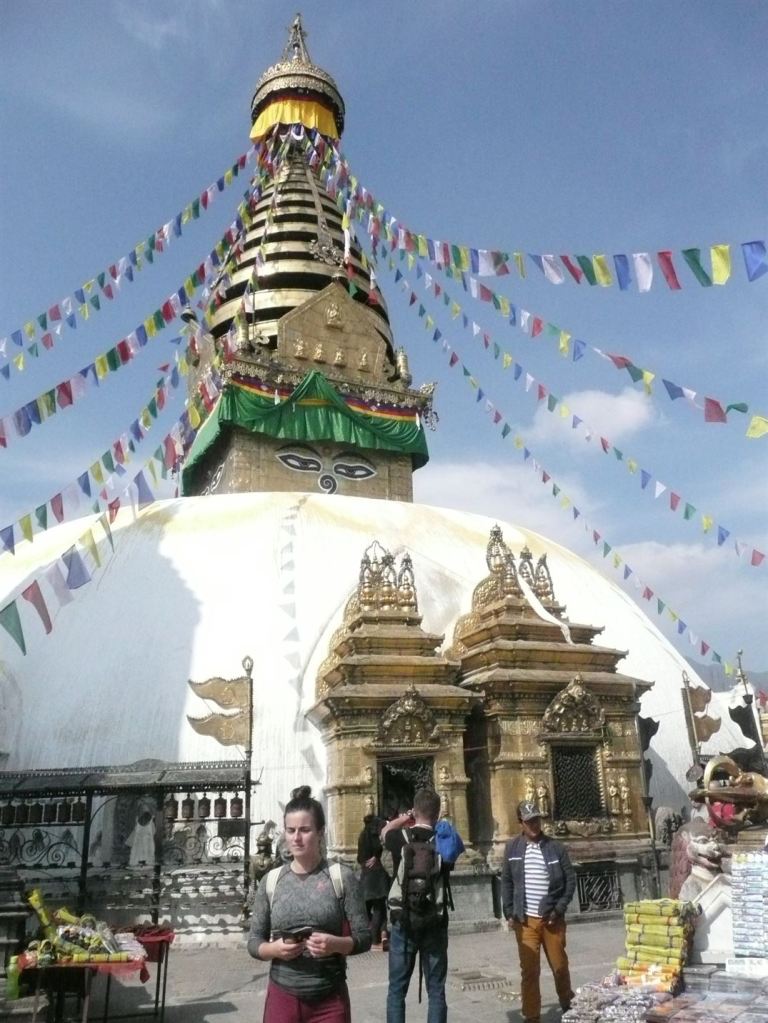
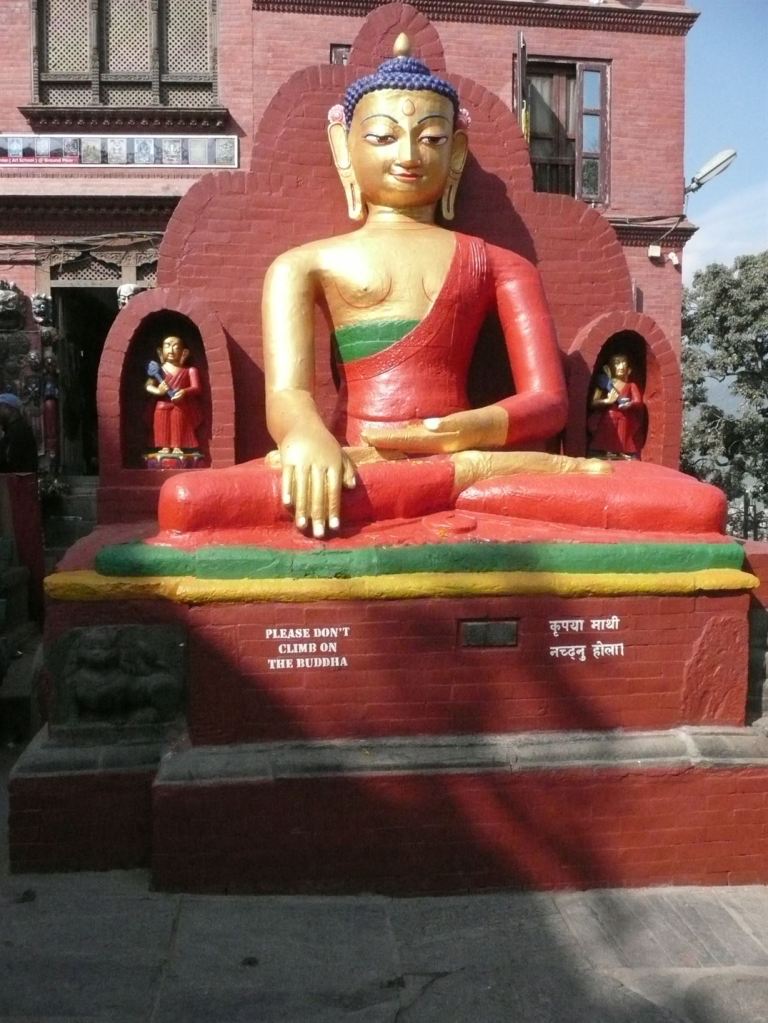
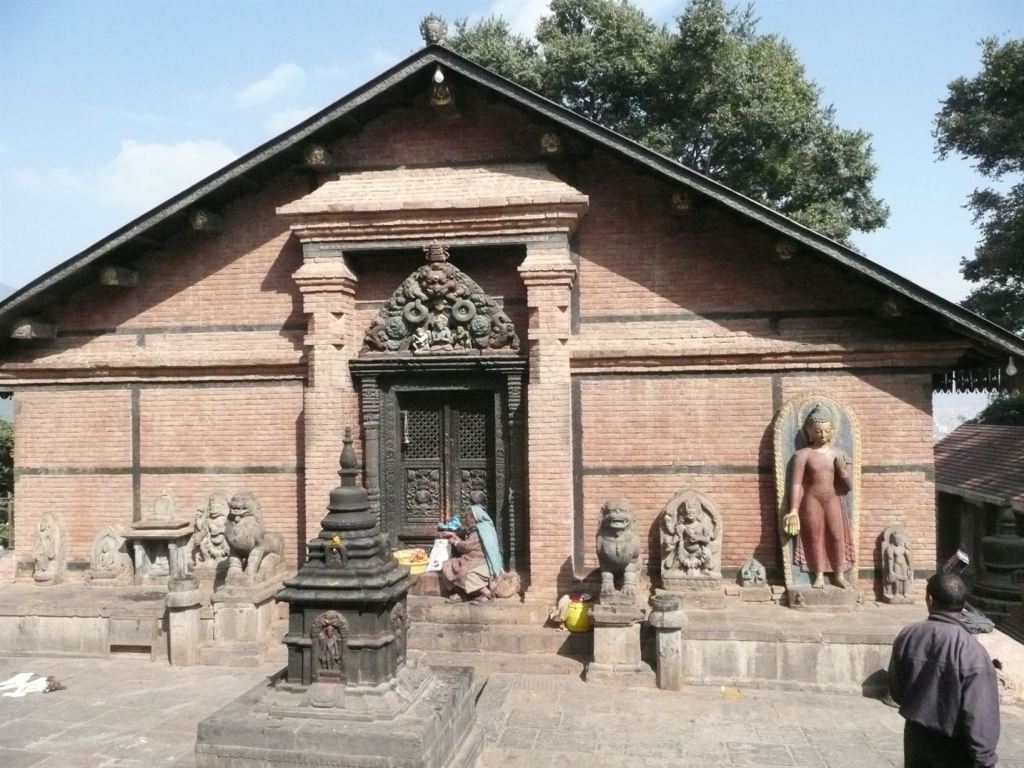
The prayer wheels contain words from scripture and are always turned from right to left. It’s also believed that people should go round Buddhist temples in a clockwise direction.
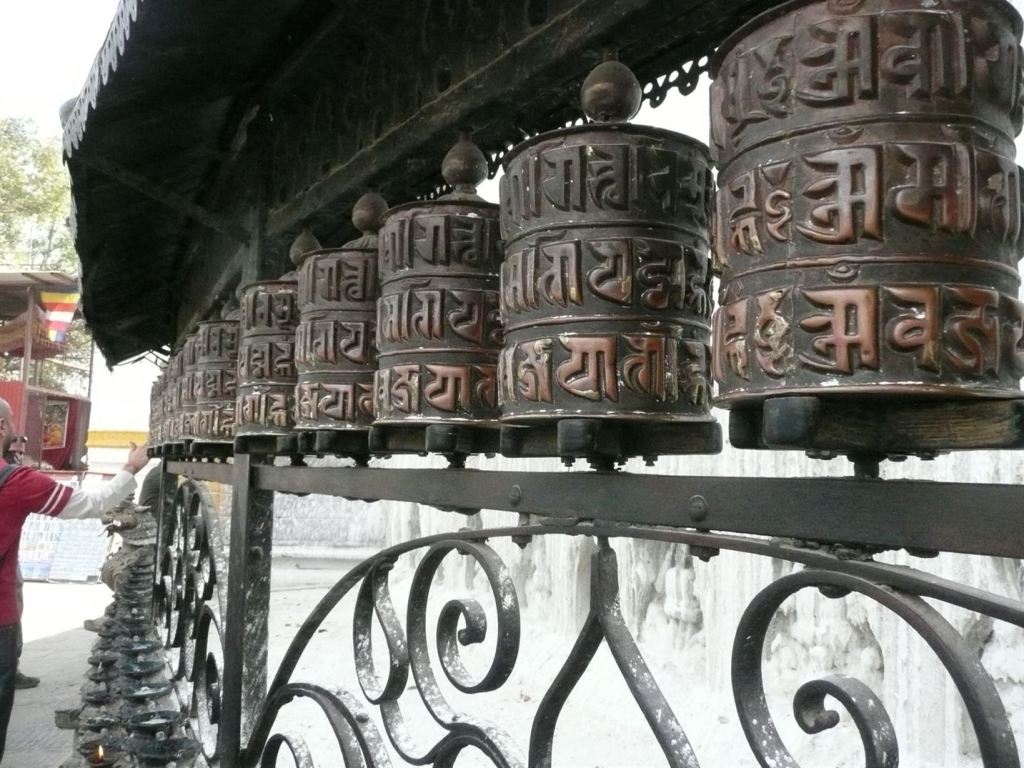
The reason the prayer wheels are spun clockwise is because the direction in which the mantras are written is that of the movement of the sun across the sky. They started in the days when people couldn’t read the scriptures but could still pray to their god by turning the wheel.
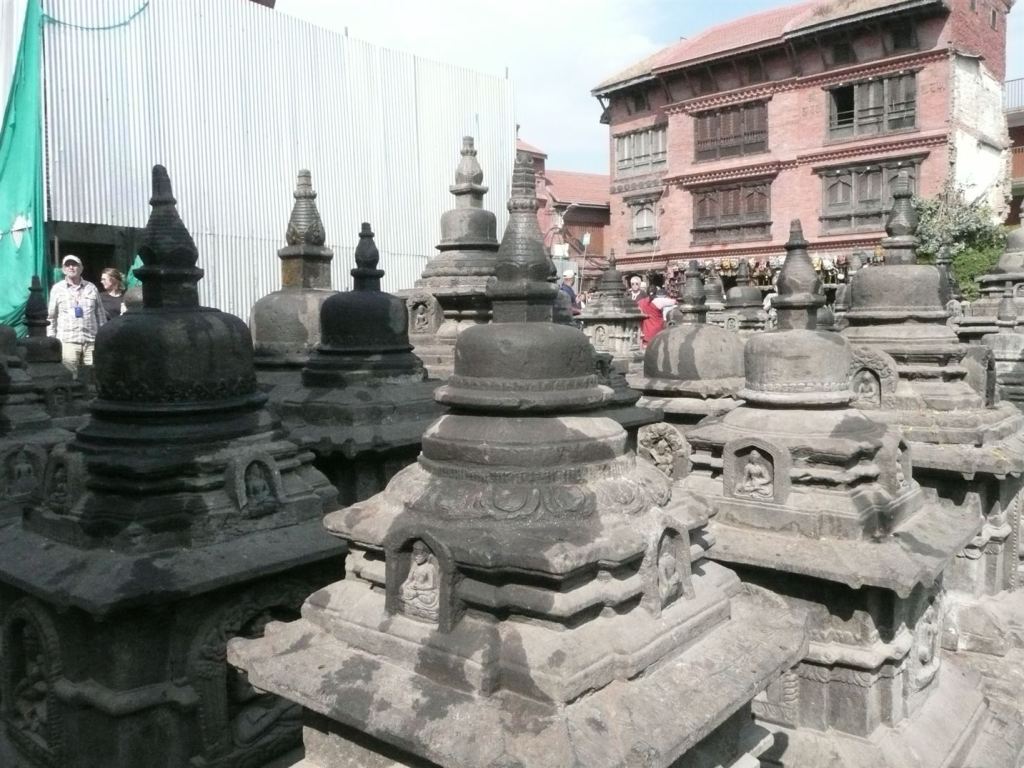
If you fancy having a go yourself, the most powerful and widely used mantra in Buddhism is ‘om mani padme hum’.
It’s said that this mantra contains all the teachings of Buddha so can’t be translated into a simple phrase but various people have had a go.
A literal interpretation is ‘Praise to the jewel in the Lotus’ (the Buddhist sacred flower).
An alternative interpretation is that the words have cleansing powers:
- Om – purifies bliss and pride.
- Ma – purifies jealousy and the need for entertainment.
- Ni – purifies passion and desire.
- Pad – purifies ignorance and prejudice.
- Me – purifies greed and possessiveness.
- Hum – purifies aggression and hatred.
Always a Shopping Opportunity
There’s a great shop near the temple selling some fine art work and we went in for the Nepalese equivalent of the carpet talk. We saw some spectacular pieces of work by students, experienced artists, master artists and by one senior master artist.
We very nearly succumbed and were saved only by the first law of the experienced traveller – to never make an expensive purchase on your first day in a new place.
Patan Durbar Square and Palace Museum
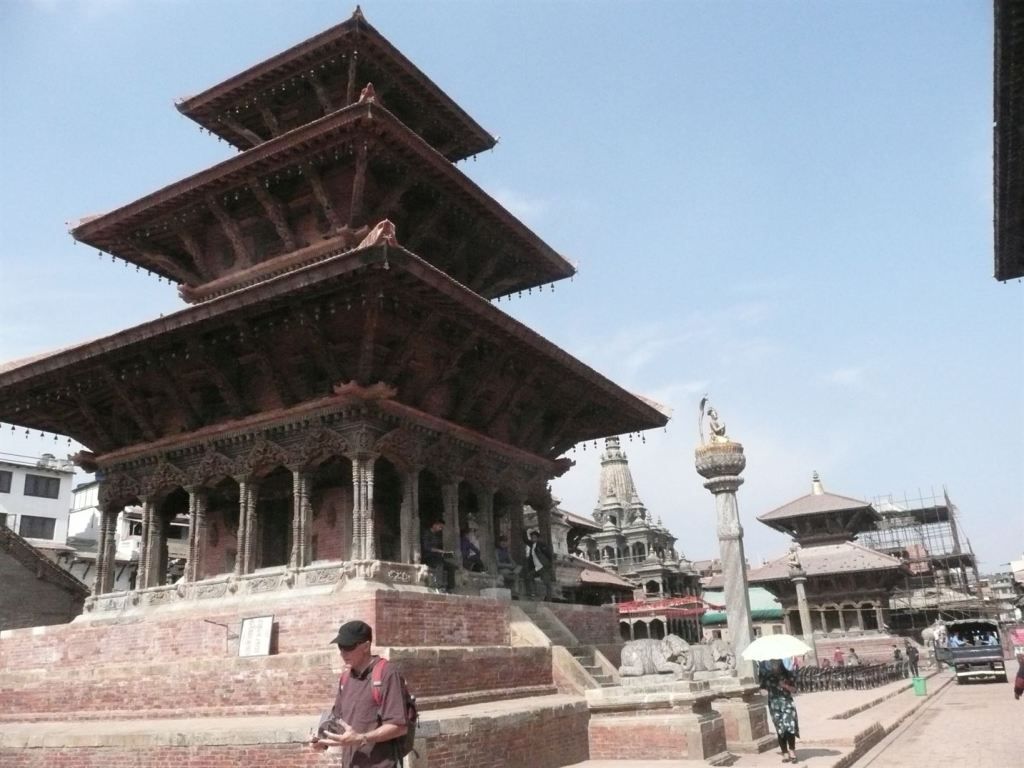
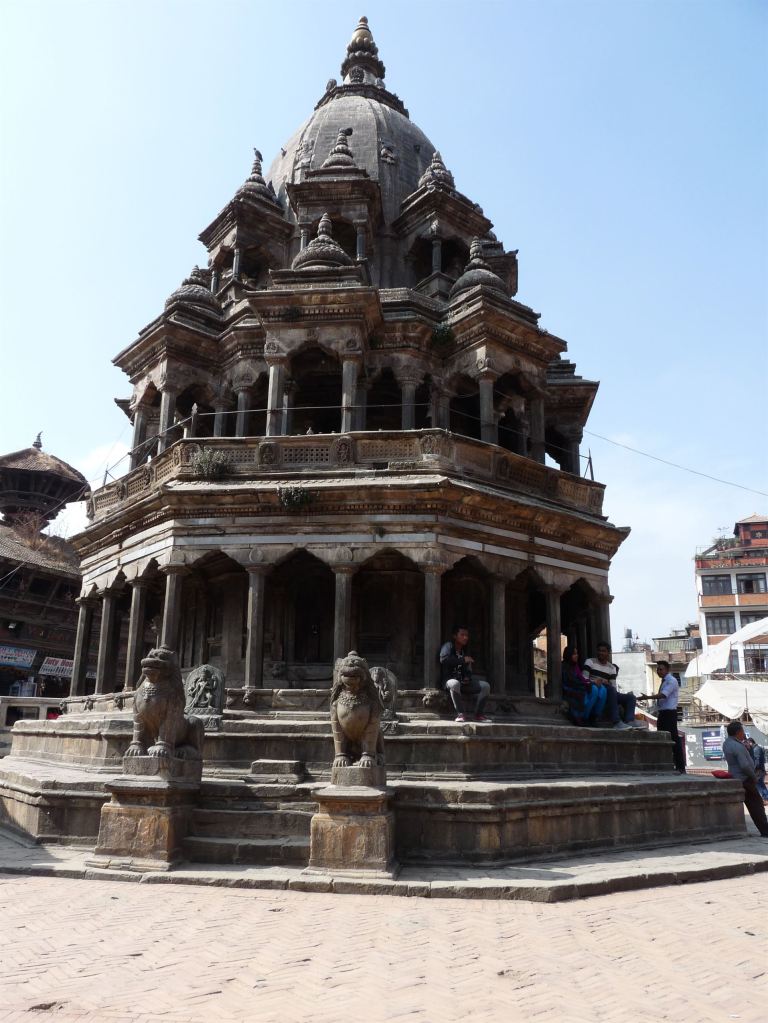
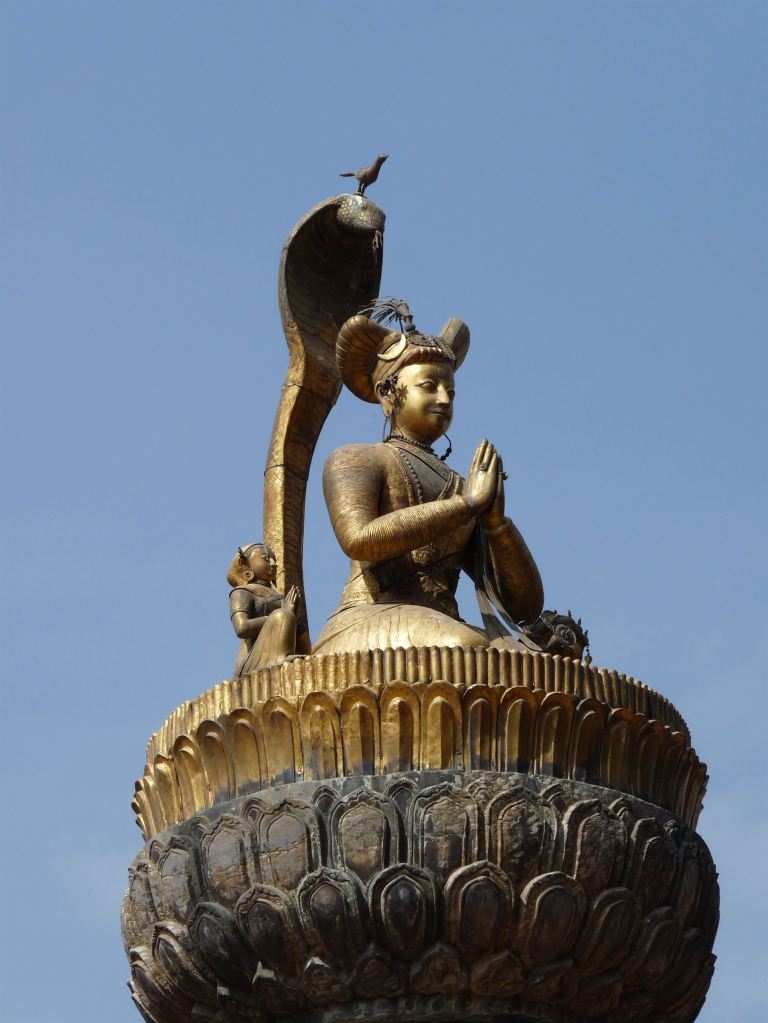
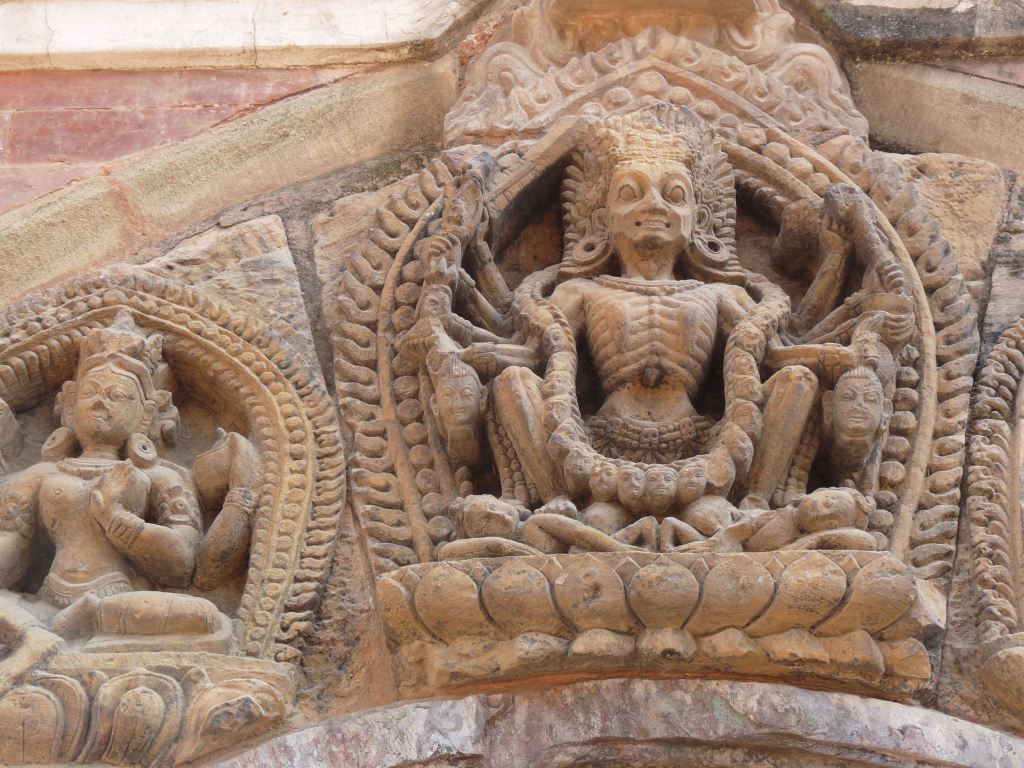
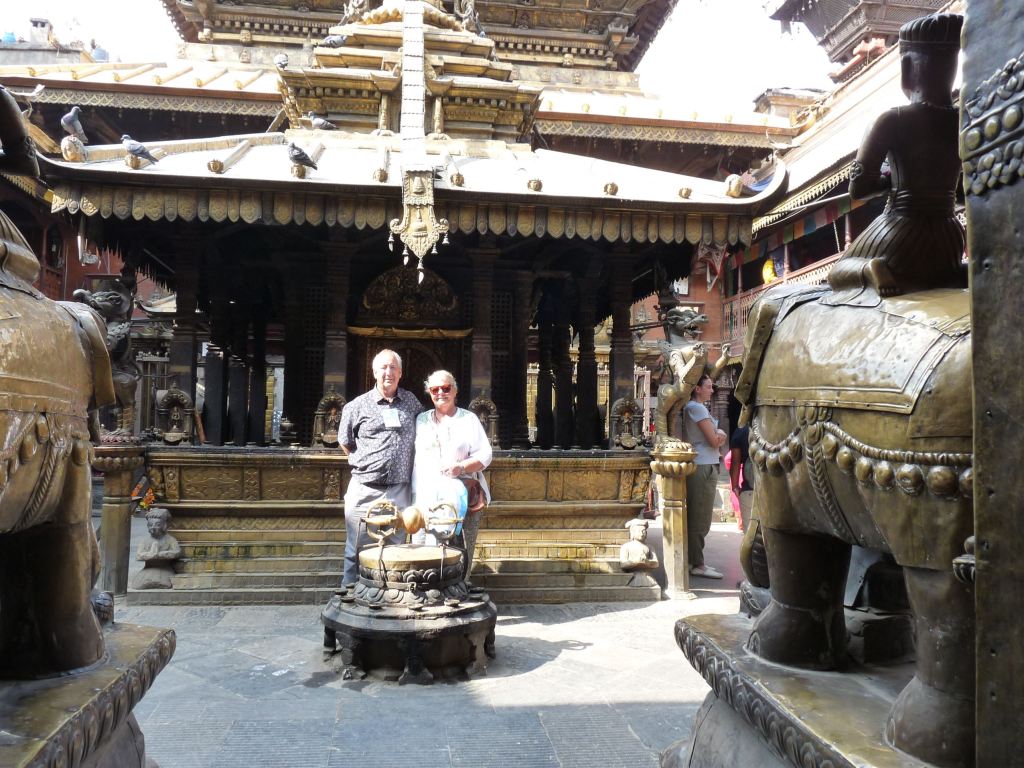
Patan Square is lovely. There’s a Hindu temple, a royal palace with a very nice café (these things are important) and a shop selling singing bowls.
I’d not come across singing bowls before but the best are hand beaten out of a combination of seven metals. The worst are machine made out of two or three.
Each bowl makes a unique sound and legend says that the sound yields so much power that they should be kept hidden.
They are used by healers to tone and balance the energy body field and to make water dance. They are also used by shop keepers to make experienced travelers forget the first rule of travelling. Bugger!
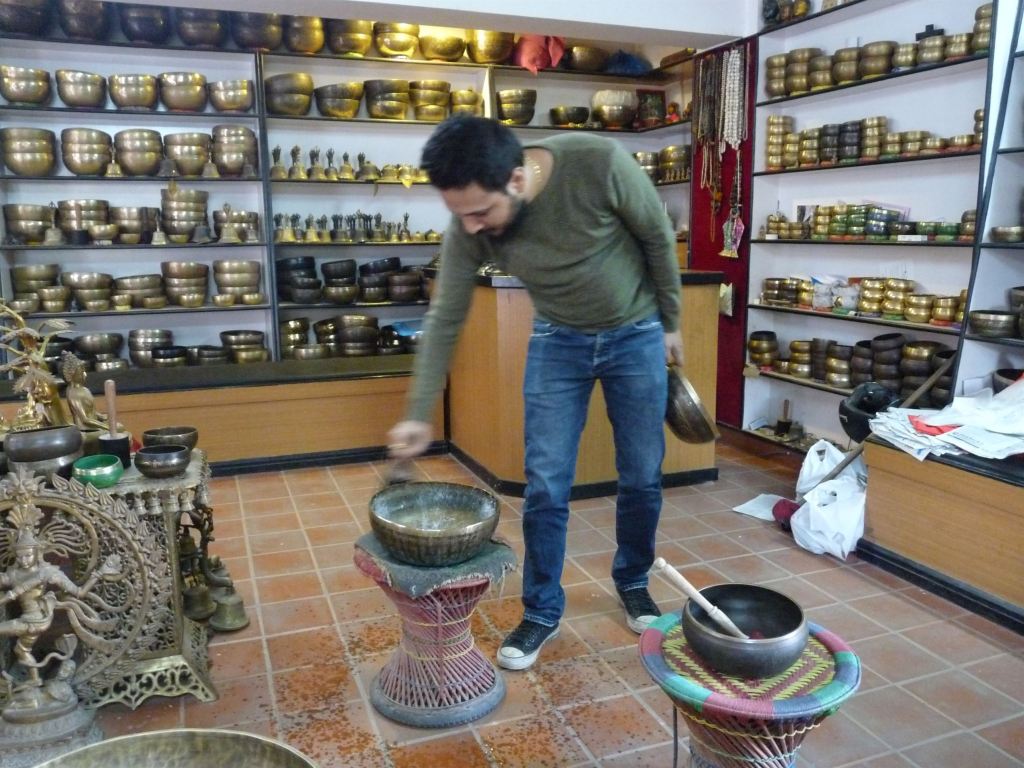
Singing bowl making water dance 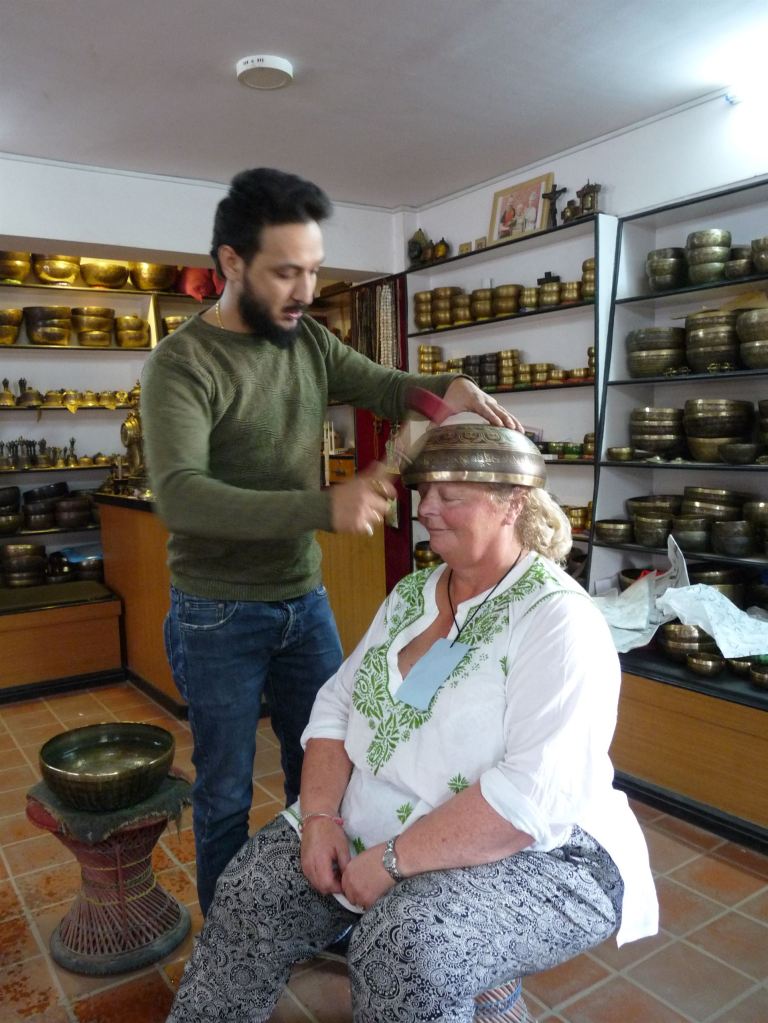
Treating Annette’s knee with a Singing Bowl
Pashupatinath Temple
I’m still somewhat in shock by our third stop. I know people die. I know we need to dispose of the bodies. But to make it a public spectacle just doesn’t seem right.
And yet …….
Pashupatinath is a public cremation site where people bring bodies for cremation. The body is washed by water from the temple and lifted on to a slab. Either the family, or more usually a professional, builds a fire and the body takes three to four hours to be consumed. At the end the remains are simply brushed into the river.
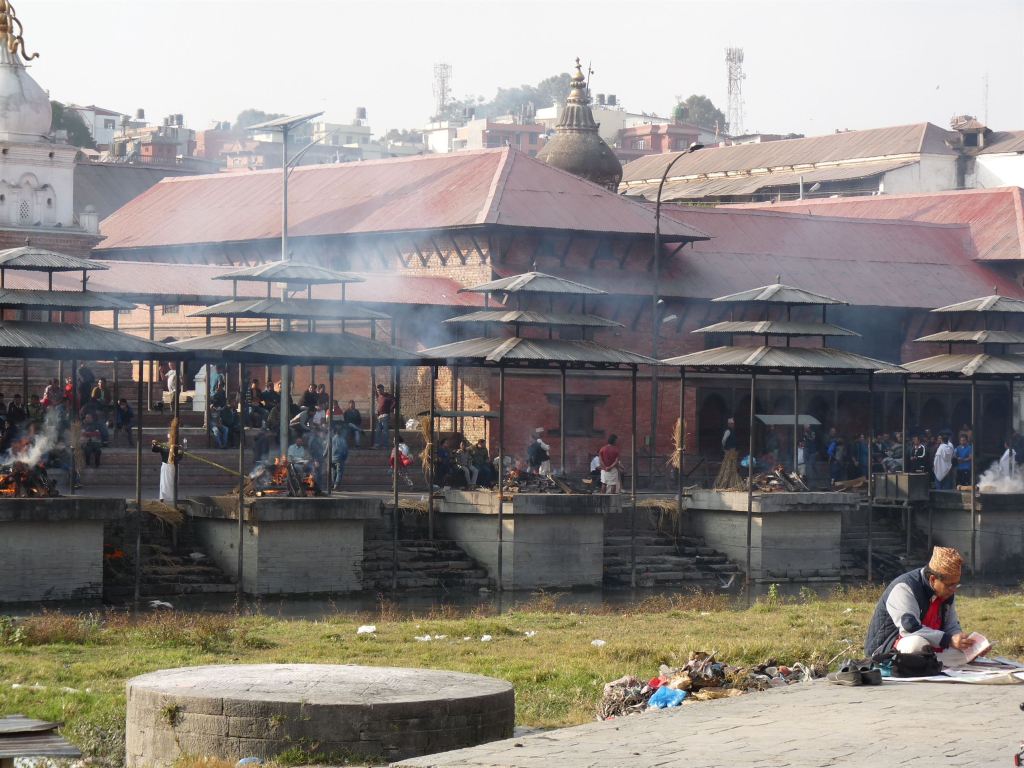
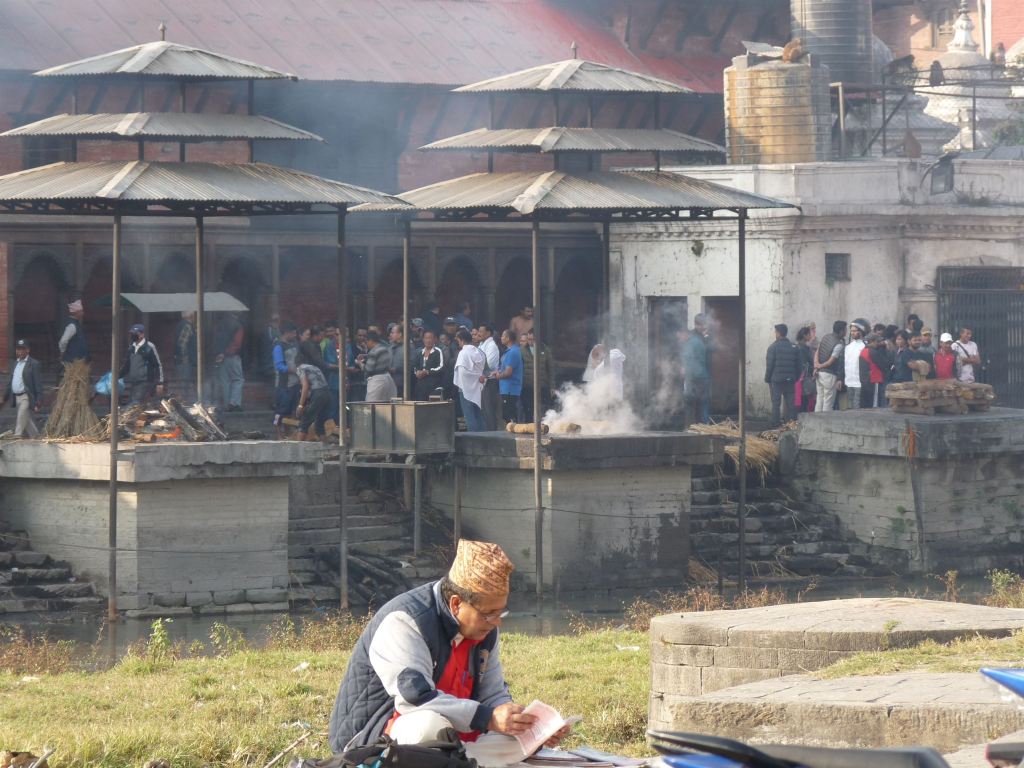
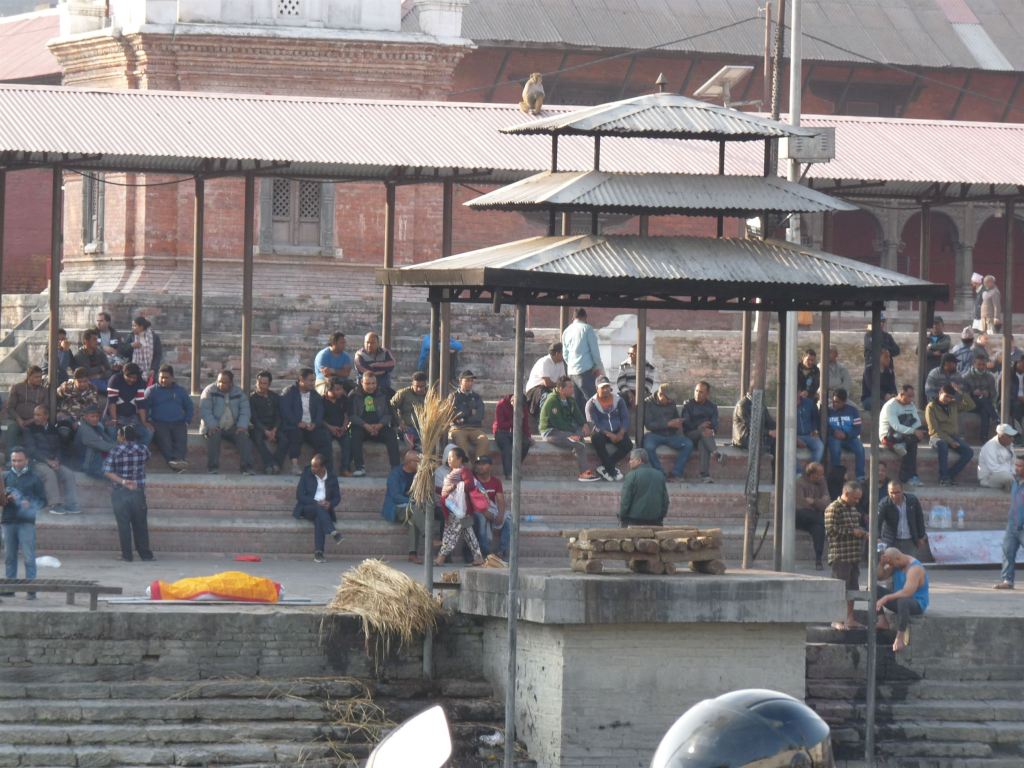
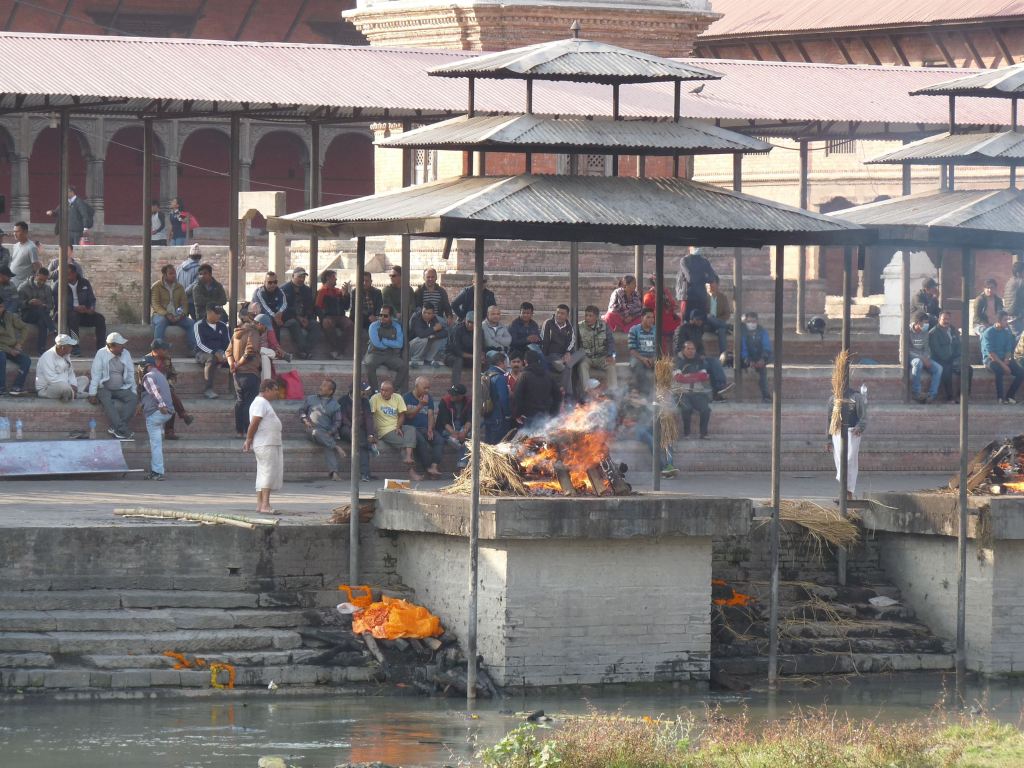
There is a more modern crematorium just down the road which does the same job in just five minutes but 95% of people choose the traditional method.
And it’s strange. I saw no-one crying. The people handling the bodies and the cremations appeared very matter of fact about things. Everyone stood or sat around chatting whilst the body was burned. And spectators, ourselves included, looked on.
The process of death was very much a fact of life and a strong part of me could see the wisdom in that. I came away incredibly moved.
Boudha Stupa
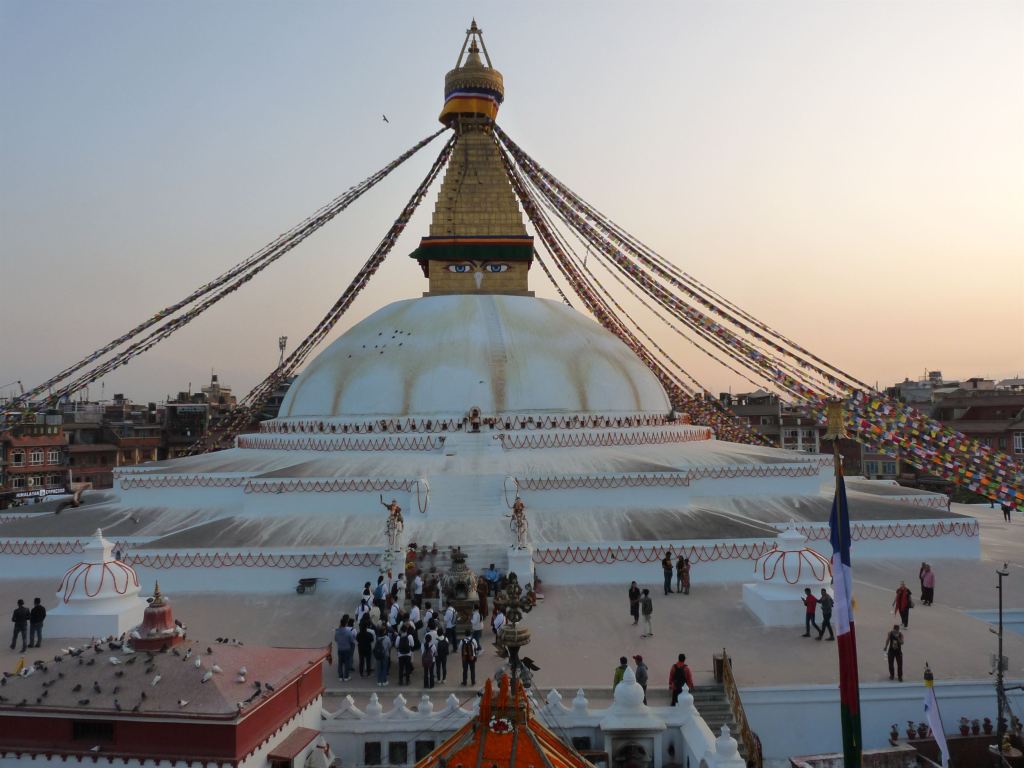
Our final stop of the day was the Boudha Stupa, the largest Buddhist temple in Nepal and the second largest in Asia (the biggest is in Myanmar).
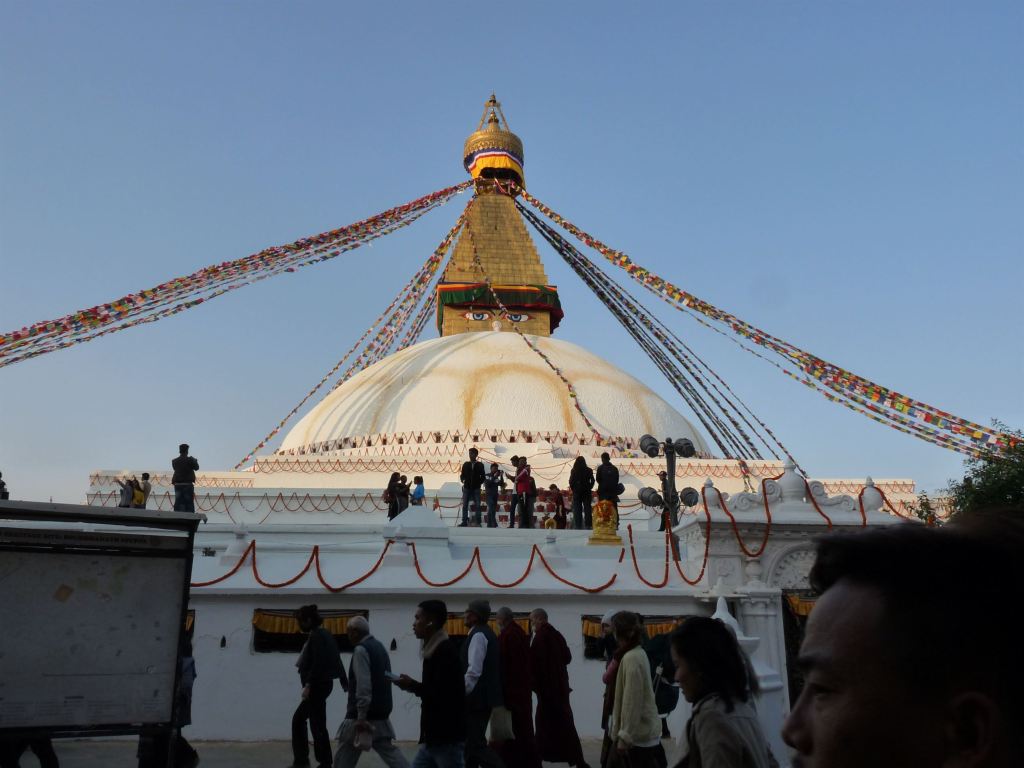
The structure of the temple is the same as at Swotambhu but it is surrounded by a circle of monasteries, shops and meditation centres.
For the most part, people go round it in a clockwise direction. If you have time you might go round it once, twice, three times, seven times or one hundred and eight times. It was not clear if there were other options.
Despite the number of people, there was a peace and tranquillity here that I loved.
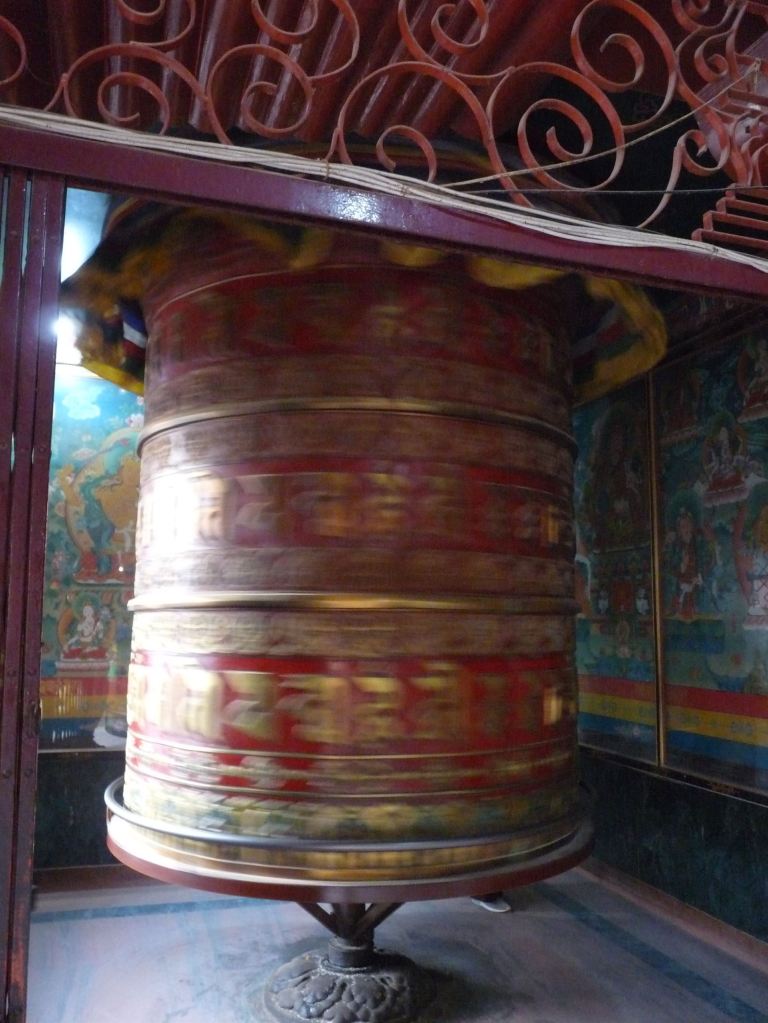
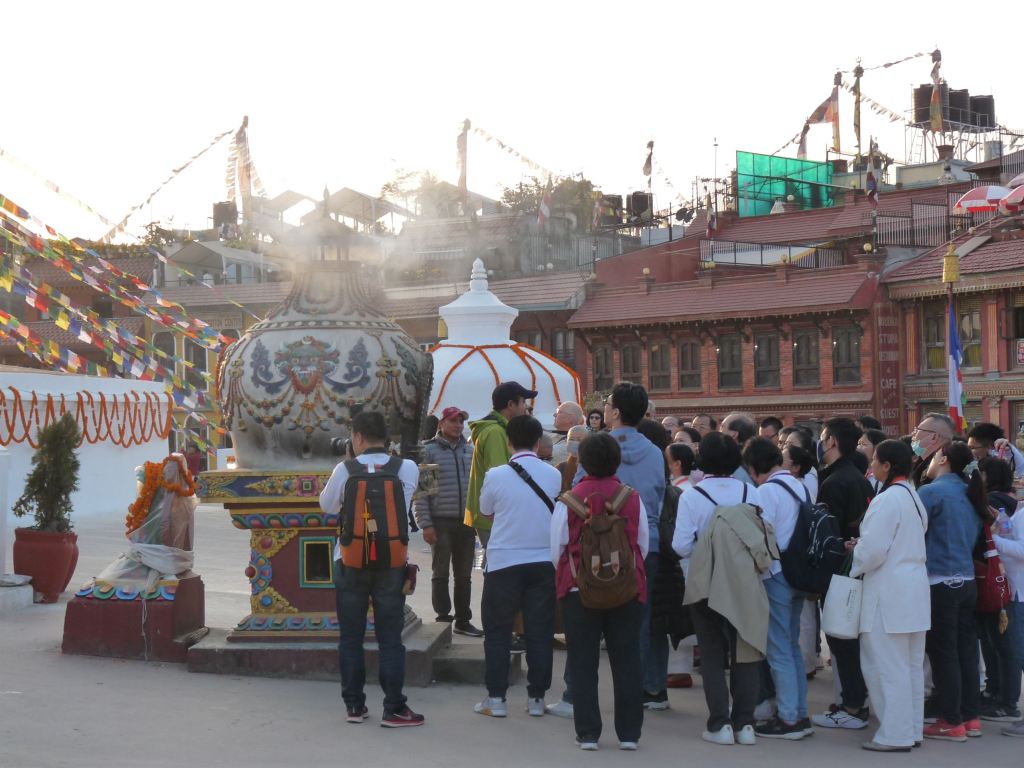
I also loved the visit I made to one of the monastery schools where a Buddhist ceremony was going on. There was drumming, chanting, horn playing, cymbals and of course bells. The monks simply ignored the visitors and did their own thing. I came away feeling I’d been listening to part of the sound track for an Indiana Jones film.
I’m not sure to what extent I was purified and blessed by today’s visits but with those and the singing bowl, I might just be moving in the right direction.
Om mani padme hum. Om mani padme hum. Om mani padme hum.
 Dave and Annette in India and Nepal